
.png)


.png)
An Expert’s 5-Step Guide to Launching an Engrave My Wine: Custom Bottles & Engraved Liquor Gifts Service
Dicembre 30, 2025
Abstract
This article provides a comprehensive framework for entrepreneurs and businesses aiming to establish a service centered on "Engrave My Wine: Custom Bottles & Engraved Liquor Gifts." It examines the foundational elements required to launch and sustain such a venture in the competitive 2026 personalized gift market. The analysis begins with strategic market positioning, exploring niche identification and brand development. It then delves into the material and logistical complexities of sourcing high-quality glass bottles, emphasizing the importance of manufacturer partnerships and the distinctions between glass types like super flint and high borosilicate. A detailed comparison of engraving technologies, namely laser engraving and sandblasting, is presented, covering technical parameters, software, and artistic capabilities. The discourse extends to operational workflow design, from customer order processing and digital proofing to studio setup and navigating the intricate regulations of shipping alcohol. Finally, the article outlines robust marketing and sales strategies, including e-commerce development, content marketing, and forging strategic alliances. The objective is to equip readers with a deep, actionable understanding of the multifaceted process of creating a successful engraved bottle service.
Key Takeaways
- Identify a specific niche, such as corporate gifts or weddings, for market differentiation.
- Partner with a reliable manufacturer for consistent access to high-quality custom bottles.
- Master one engraving method, laser or sandblasting, before diversifying your offerings.
- Develop a meticulous proofing process to eliminate errors and ensure customer satisfaction.
- Understand and comply with all local and international laws for shipping engraved liquor gifts.
- Invest in professional photography to showcase the detail of your custom engraved wine bottles.
- Build a strong brand story that connects emotionally with the act of personalized gifting.
Table of Contents
- Step 1: Architecting Your Business Foundation and Brand Identity
- Step 2: Sourcing the Perfect Canvas: A Guide to Selecting Custom Bottles
- Step 3: The Art and Science of Engraving on Glass
- Step 4: Engineering an Efficient Operational and Fulfillment Workflow
- Step 5: Marketing, Sales, and Scaling Your Engraved Gift Enterprise
- Frequently Asked Questions (FAQ)
- Conclusione
- References
Step 1: Architecting Your Business Foundation and Brand Identity
Launching a service to "Engrave My Wine: Custom Bottles & Engraved Liquor Gifts" is not merely about acquiring an engraving machine and a case of wine. It is an exercise in understanding human emotion, memory, and the profound significance of the personalized artifact. Before a single beam of light or grain of sand touches glass, one must construct a robust conceptual and strategic framework. This initial step is the least tangible but the most determinative of long-term success. It involves a deep contemplation of your market position, the specific emotional needs you aim to fulfill, and the legal landscape you must navigate.
Defining Your Niche in the Personalized Gift Economy
The personalized gift market is a vast and variegated space. To simply enter it is to be a drop in a very large ocean. Your first intellectual task is to define your specific territory. Who, precisely, are you serving? A generalist approach, while seemingly broad in its appeal, often results in a diluted brand message that fails to resonate deeply with any particular group. The goal is to become the indisputable solution for a specific problem or occasion.
Consider the possibilities. You might specialize in the corporate gifting sector, where companies seek to impress clients or reward employees with sophisticated, branded engraved liquor gifts. This path requires an understanding of corporate branding guidelines, a capacity for bulk orders, and a polished, professional aesthetic. Your communication would focus on concepts like brand elevation, client retention, and employee appreciation.
Alternatively, you could immerse yourself in the world of personal celebrations. Weddings, anniversaries, and milestone birthdays are powerful emotional events. Here, your service becomes a tool for commemoration. You would be engraving not just names and dates, but the very essence of a shared memory. Your brand voice would be empathetic, sentimental, and celebratory. The designs might be more ornate, incorporating monograms, personal messages, and even photo-realistic images.
A third avenue could be catering to the connoisseur—the whiskey aficionado, the wine collector, the craft spirit enthusiast. This niche values subtlety, quality, and exclusivity. The focus would be less on celebratory text and more on enhancing the bottle as a collector's item. This could involve engraving club logos, tasting notes, or limited-edition numbering. Success in this area depends on your own credibility and knowledge of the spirits world.
Choosing your niche is an act of strategic self-limitation that paradoxically opens the door to market leadership. It informs every subsequent decision: the types of bottles you stock, the style of your designs, your pricing structure, and your marketing language. Take a moment to reflect: what narrative of gifting do you want to tell? Whose stories do you want to help immortalize in glass?
The Psychology of Gifting and Its Impact on Your Brand
At its core, your business is not about selling engraved glass; it is about facilitating a profound human interaction. The act of giving a personalized gift is laden with psychological weight. It communicates a level of thought, effort, and intimacy that an off-the-shelf product cannot. As a provider of an "Engrave My Wine: Custom Bottles & Engraved Liquor Gifts" service, understanding this psychology is paramount.
The sociologist Theodore Caplow (1982) studied gift-giving rituals and noted their role in reinforcing social bonds. A personalized gift amplifies this effect. It says to the recipient, "I see you. I know you. I have invested time and creativity specifically for you." This is the emotional value proposition you are offering. Your brand must embody this sentiment. Your website, your customer service interactions, and your final packaged product must all feel personal, thoughtful, and special.
This psychological dimension should influence your branding. Your brand name, logo, and color palette should evoke feelings of warmth, celebration, prestige, or whatever core emotion aligns with your chosen niche. The language you use should be rich with emotional resonance. Instead of "Buy our engraved bottles," consider "Create a timeless keepsake" or "Celebrate their success with a personal touch."
Think about the user experience on your website. Does it feel like a sterile transaction, or does it guide the customer through a creative, meaningful process? The journey of customizing a bottle should feel like a collaboration between the customer and your brand. You are not a vendor; you are a partner in their act of giving. This empathetic approach, which recognizes the emotional labor of the gift-giver, will build a deep and lasting connection with your clientele. They will return not just because you have a quality product, but because you understand the human significance of what you help them create.
Crafting a Compelling Brand Story
People do not connect with corporations; they connect with stories. Your brand story is the narrative that encapsulates your purpose, your values, and what makes you unique. It is the "why" behind your "what." A compelling story can transform your business from a simple service provider into a meaningful brand with a loyal following.
Your story could be rooted in a personal experience. Perhaps the idea for the business came from a deeply meaningful engraved gift you once received or gave. Sharing that anecdote can create an immediate, authentic connection with customers who are looking to create a similar emotional impact. It humanizes your brand and shows that you are motivated by more than just profit.
Alternatively, your story could be about craftsmanship. You could focus on the artistry of engraving, the history of the technique, and your dedication to preserving and perfecting it. This narrative appeals to customers who value quality, detail, and the maker's touch. You could tell the story of your search for the perfect engraving machine, the hours spent mastering its use, or your collaboration with artisans.
A third approach is to build your story around your chosen materials. If you partner with a high-quality manufacturer, their story becomes part of your story. For example, if you source your bottiglia di vetro per liquori selection from a company with a long history of excellence and a commitment to sustainable practices, you can weave that into your brand narrative. This tells customers that you care about every element of the final product, from the raw materials to the final engraving. It positions your brand as a curator of quality.
Your brand story should be consistent across all your platforms—your "About Us" page, your social media profiles, and your marketing materials. It is not a slogan, but a guiding ethos. It provides the context that gives your engraved liquor gifts their deeper meaning.
Legal and Compliance Considerations for Liquor Gifts
This final part of the foundational stage is pragmatic but absolutely vital. Operating a business that involves alcoholic beverages places you under a specific and often complex regulatory framework. Ignoring this can lead to severe legal and financial consequences. The laws governing the sale and shipment of alcohol vary dramatically by country, state, and even local municipality.
Your first responsibility is to determine what licenses are required to operate your business. In the United States, for example, you may need a combination of federal and state-level retail liquor licenses. In Europe, the regulations are dictated by both EU-wide directives and the national laws of each member state. You must consult with a legal professional who specializes in alcohol beverage law in your specific jurisdiction. This is not an area for guesswork or reliance on online forums.
The next layer of complexity involves shipping. Shipping alcohol is not like shipping a book or a t-shirt. Many postal services and private carriers have strict rules and require special contracts and labeling for alcohol shipments. You must investigate the specific requirements of each carrier you plan to use. Furthermore, there are "dry" jurisdictions that prohibit the direct shipment of alcohol to consumers altogether. You will need to build a system that can identify and block orders to these locations.
Age verification is another non-negotiable compliance issue. You must have a robust system in place to ensure that both the purchaser and the recipient of your engraved liquor gifts are of legal drinking age. This often involves using a third-party age verification service during the online checkout process and may require an adult signature upon delivery.
Building a compliance matrix that details the laws, licensing requirements, and shipping rules for every region you plan to serve is a necessary undertaking. While it may seem daunting, establishing these legal and operational guardrails from the outset protects your business and builds trust with your customers. It demonstrates that you are a serious, responsible, and professional enterprise.
Step 2: Sourcing the Perfect Canvas: A Guide to Selecting Custom Bottles
The bottle is the body, the physical vessel that will carry the soul of the message you engrave. Its quality, shape, and feel are not incidental details; they are integral to the perceived value and emotional impact of the final gift. A beautifully executed engraving on a flimsy, low-quality bottle is a contradiction, a masterpiece painted on a paper napkin. Therefore, the selection and sourcing of your glass bottles is a process that demands as much care and critical thought as the engraving itself. This step involves a deep dive into the material science of glass, the psychology of form, and the strategic importance of building a robust supply chain.
The Materiality of the Message: Understanding Glass Quality
Not all glass is created equal. For a premium service focused on "Engrave My Wine: Custom Bottles & Engraved Liquor Gifts," the choice of glass material is a foundational decision that speaks volumes about your brand's commitment to quality. The most common options for high-end spirits and wine bottles are Super Flint Glass and High Borosilicate Glass, each with distinct properties that affect both the aesthetic and the engraving process.
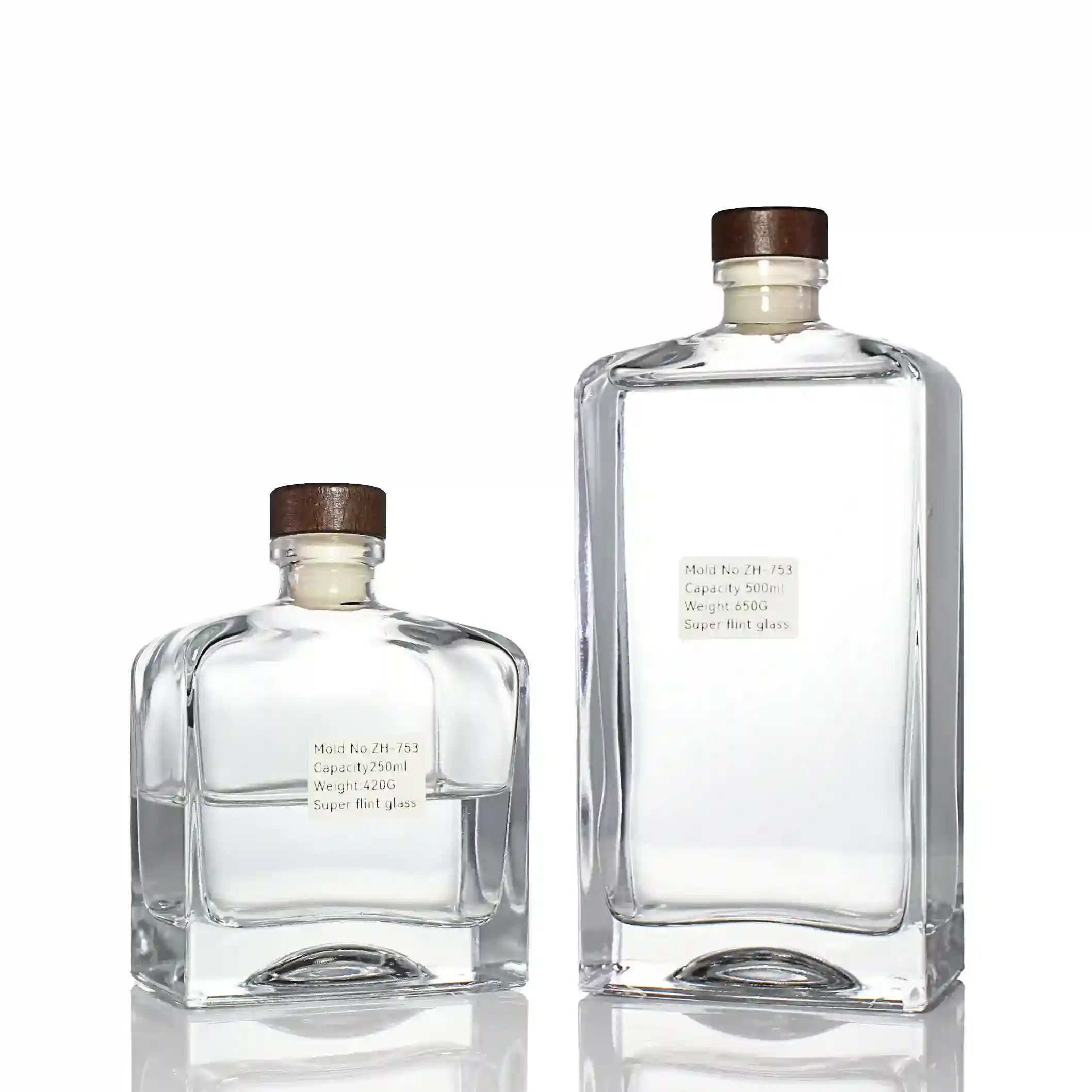
Vetro Super Flint is the standard for luxury spirits. Its name derives from the flint rock used in historical glass production, but modern Super Flint is a type of high-clarity soda-lime glass with a very low iron content. The reduced iron oxide is what gives it its exceptional transparency and brilliance, eliminating the greenish tint often seen in standard glass. This water-white clarity makes the color of the liquor inside—the deep amber of a whiskey or the clear sparkle of a gin—appear more vibrant and appealing. From an engraving perspective, its consistent density and smooth surface allow for crisp, clean lines, whether using a laser or sandblasting. It provides a perfect, neutral canvas.
Vetro borosilicato alto, on the other hand, is known for its superior thermal and chemical resistance. It is made by adding boric oxide to the traditional glass constituents. This results in a glass that can withstand extreme temperature changes without cracking (high thermal shock resistance) and is less reactive with its contents. While commonly used for laboratory glassware and high-end kitchenware, it is increasingly being used for unique, craft spirit decanters and bottles, especially for custom designs that might be thinner or more complex in shape zhonghaiglass.com. It often has a lighter feel than Super Flint glass of the same volume. Engraving on borosilicate glass can produce exceptionally fine details, and its durability is an added selling point for a keepsake gift.
The table below offers a comparison to help clarify your choice.
| Caratteristica | Vetro Super Flint | Vetro borosilicato alto | Standard Soda-Lime Glass |
|---|---|---|---|
| Primary Composition | Soda-lime-silica with low iron oxide | Silica and boric oxide | Soda-lime-silica |
| Clarity & Brilliance | Exceptional, water-white appearance | Very high clarity, often feels lighter | Good, but can have a slight green tint |
| Thermal Resistance | Moderate | Very High (-30°C to 300°C) | Low (0°C to 80°C) |
| Durability | Good, heavy and substantial feel | High impact strength, more resistant to breakage | Standard, can be prone to chipping |
| Common Use Case | Premium spirits (Whiskey, Vodka), luxury wine | Unique decanters, craft spirits, complex shapes | Standard wine bottles, food jars |
| Engraving Quality | Excellent for crisp, clean lines | Excellent for fine, intricate details | Good, but surface inconsistencies can occur |
| Cost | High | High | Low to Moderate |
Your choice of material should align with your brand positioning. If you are targeting the luxury whiskey market, the heavy, brilliant feel of Super Flint is likely the expected standard. If your niche is innovative craft distilleries or unique decanter sets, the technical benefits and design flexibility of High Borosilicate glass could be a powerful differentiator.
The Shape of Celebration: How Bottle Form Influences Perception
The silhouette of a bottle is its most immediate form of communication. Long before a customer reads the label or the engraving, they react to its shape. This reaction is deeply rooted in cultural associations and archetypes. As a curator of bottles for your engraving service, you must become fluent in this visual language.
Consider the classic bottle shapes in the world of spirits and wine. A 'Bordeaux' wine bottle, with its straight sides and high, proud shoulders, conveys a sense of structure, tradition, and boldness. It is a shape associated with powerful red wines. A 'Burgundy' bottle, with its gently sloping shoulders and wider body, feels softer, more elegant, and perhaps more romantic. It is the classic vessel for nuanced wines like Pinot Noir and Chardonnay.
In the spirits world, the diversity is even greater. The classic, square-shouldered, heavy-based bottle of many premium whiskeys projects stability, masculinity, and heritage. A tall, slender, frosted bottle is almost universally associated with vodka, suggesting purity, coldness, and modernity. The squat, rounded, often ornate bottles used for cognac or brandy evoke opulence, age, and contemplative sipping.
When you select the bottles for your catalog, you are not just choosing containers; you are choosing sets of pre-existing associations. Your task is to match these shapes to the occasions and sentiments your customers want to express. For a wedding gift, the elegant curves of a Burgundy-style champagne bottle might be more appropriate than a rugged, blocky whiskey bottle. For a corporate gift celebrating a major deal, the opposite might be true.
Offering a curated selection of 5-10 iconic bottle shapes is a good starting point. This provides customers with meaningful choices without overwhelming them. For each bottle, you should write a small description that explains its typical use and the "personality" it conveys. This educates your customer and helps them make a more intentional choice, further elevating their experience and the thoughtfulness of their gift.
The Manufacturer Partnership: A Deep Dive into Sourcing Custom Glass Bottles
Once you have defined the materials and shapes you need, the next critical step is establishing your supply chain. For a business built on quality, this means forging a direct partnership with a glass bottle manufacturer. While working with a local wholesaler might seem easier for small initial quantities, a manufacturer partnership offers unparalleled advantages in quality control, customization, and cost-effectiveness as you scale.
A manufacturer like Vetro Zhonghai provides a direct line to the production process. This relationship moves beyond a simple transactional one to a collaborative one. You are no longer just a buyer; you are a client whose specific needs can be addressed at the source. This is particularly vital for an engraving business. You can work with the manufacturer to ensure the bottles you receive have surfaces that are optimized for engraving—free from seams, blemishes, or inconsistencies that could ruin a delicate design.
Building this relationship starts with research. Identify manufacturers that specialize in the type of glass packaging you need, whether it's for spirits, wine, or cosmetics. Look for companies that have a history of working with international clients and can demonstrate a deep understanding of quality standards, like ISO certifications (International Organization for Standardization, 2015). Review their product catalogs, their stated production capacities, and their quality control processes. Many manufacturers, as noted by Zhonghai, offer free samples, allowing you to physically inspect the quality before committing to a large order.
Communication is key. You must be able to clearly articulate your technical requirements: the exact glass type, the desired weight, the precise dimensions, and the acceptable tolerance for imperfections. A good manufacturing partner will have a professional team that can guide you through this process, helping to align your vision with their production capabilities. This partnership is the bedrock of your material supply, ensuring you can consistently deliver the high-quality canvas your art deserves.
Navigating the OEM/ODM Process for Truly Unique Designs
While a curated selection of stock bottles is an excellent starting point, the pinnacle of a custom engraving service is offering truly unique bottle designs. This is achieved through an Original Equipment Manufacturer (OEM) or Original Design Manufacturer (ODM) process. This is where your partnership with a manufacturer becomes truly transformative.
ODM is the more straightforward path. The manufacturer already has a portfolio of existing bottle molds and designs that are not part of their standard catalog. You can select one of these proprietary designs and have it produced exclusively for your brand. This offers a degree of uniqueness without the significant investment of creating a completely new mold. It's an effective way to differentiate your offerings quickly.
OEM is the process of bringing your own unique design to life. This is the ultimate expression of brand identity. You provide the manufacturer with detailed drawings or a 3D model of a bottle that exists only in your imagination. The manufacturer then uses their technical expertise to create a custom mold and produce the bottle to your exact specifications. This process is more complex and involves a "mold fee" to cover the cost of creating the specialized tooling . However, it gives you a product that no one else in the world has, a powerful competitive advantage.
The OEM process is a collaborative journey. It typically involves these stages:
- Concept & Drawing: You submit your idea, often as a detailed technical drawing.
- Quotation & Mold Fee: The manufacturer quotes the price per bottle and the one-time mold fee.
- Mold Creation: Upon payment of the fee, they create the production mold, a process that can take several weeks.
- Sampling: They produce a small batch of samples from the new mold for your approval.
- Bulk Production: Once you approve the sample, they begin mass production of your custom bottle.
This process allows you to create bottles that are perfectly suited to your niche. Imagine a whiskey bottle shaped like a lighthouse for a coastal-themed gift shop, or a wine bottle with an indented heart for the wedding market. The OEM process turns your bottle from a simple container into a unique sculptural object, adding immense value to your engraved liquor gifts.
Implementing Rigorous Quality Control from the Start
Quality control is not a single step at the end of the process; it is a continuous philosophy that must be embedded in your supply chain. Even with a trusted manufacturing partner, you are the final arbiter of quality for your brand. Implementing your own QC protocols is essential.
When you receive a shipment of bottles, you cannot simply move them from the pallet to the engraving shelf. You must conduct your own inspection. A good QC process for incoming bottles should include:
- Visual Inspection: Check a statistical sample of bottles from each case for cosmetic flaws like scratches, air bubbles ("seeds"), or "stones" (unmelted crystalline inclusions).
- Dimensional Checks: Use calipers to verify that the bottles meet the specified dimensions for height, diameter, and wall thickness. Consistency is crucial for setting up your engraving machine.
- Surface Consistency: Run a gloved hand over the engraving area to feel for any ripples, seams, or inconsistencies that might interfere with the engraving process.
- Stability Test: Place bottles on a perfectly flat surface to ensure they do not wobble. A thick, even base is a sign of quality manufacturing.
- Stress Testing: While you may not have the advanced equipment of a manufacturer, simple tests like carefully tapping the bottle can sometimes reveal internal stresses. More importantly, discuss the manufacturer's own stress testing procedures, such as thermal shock and impact resistance tests.
Documenting your findings is crucial. If you find a batch that does not meet your standards, you will need this documentation to resolve the issue with your manufacturer. A good partner will work with you to replace defective products. This rigorous attention to the quality of your raw materials ensures that every engraved bottle that leaves your studio is a worthy ambassador for your brand.
Step 3: The Art and Science of Engraving on Glass
This is the heart of your craft, the moment where a simple bottle is transfigured into a personal totem. The process of engraving on glass is a delicate dance between artistic vision and technical precision. It requires a deep understanding of your tools, a respect for the material, and a keen eye for design. The two dominant technologies for creating high-end "Engrave My Wine: Custom Bottles & Engraved Liquor Gifts" are laser engraving and sandblasting. Each method has its own unique character, capabilities, and challenges. Choosing your path and mastering its intricacies is the core operational task of your business.
Choosing Your Instrument: Laser vs. Sandblasting
The choice between laser engraving and sandblasting is not merely a technical one; it defines the aesthetic signature of your work. Each method interacts with the glass in a fundamentally different way, producing distinct results in texture, depth, and appearance.
Laser Engraving utilizes a focused beam of light to create micro-fractures on the surface of the glass. The heat from the laser causes tiny chips to flake away, resulting in a frosted appearance where the design is marked. The process is controlled by a computer, allowing for incredible precision and repeatability. It excels at rendering fine lines, intricate text, and complex vector-based logos with sharp, well-defined edges.
The primary types of lasers used for glass are CO2 lasers and UV lasers. CO2 lasers are more common and generally more affordable. They work well on most types of glass but can sometimes generate excess heat, which requires careful management of power and speed settings to avoid unwanted cracking or chipping. UV lasers operate at a shorter wavelength and are considered a "cold marking" process. They produce less thermal stress on the glass, resulting in an even finer, smoother finish with a lower risk of micro-fractures. UV lasers are particularly adept at engraving delicate items or high-borosilicate glass.
Sandblasting, also known as abrasive blasting, is a more manual and sculptural process. It involves propelling a fine abrasive medium (like aluminum oxide) at high velocity through a nozzle to carve into the glass. The areas of the bottle that are not to be engraved are protected by a stencil-like "resist" mask, which is typically cut from vinyl using a plotter.
Unlike the surface-level marking of a laser, sandblasting carves into the glass, creating a deep, rich, and beautifully textured finish. It can produce a level of depth and a smooth, velvety texture that is difficult to replicate with a laser. This makes it ideal for bold designs, deep-etched monograms, and color-filling, where paint is applied to the etched area. However, it is generally a slower, more labor-intensive process and is less suited for reproducing photographic images or extremely fine, complex text compared to a high-resolution laser.
The following table provides a direct comparison of these two techniques.
| Aspect | Laser Engraving | Sandblasting (Abrasive Blasting) |
|---|---|---|
| Process | A focused laser beam creates micro-fractures on the glass surface. | High-pressure abrasive particles carve away the glass surface. |
| Finish & Texture | Frosted, sharp, and precise surface mark. Can feel slightly rough. | Deep, smooth, and even etch with a velvety texture. |
| Depth | Surface level to very shallow. | Can achieve significant depth and a 3D, carved effect. |
| Detail & Complexity | Excellent for very fine details, small text, and complex vector art. | Good for bold designs; fine detail is limited by the quality of the resist mask. |
| Photo Engraving | Possible with specialized software and dithering techniques. | Not suitable for photographic reproduction. |
| Speed & Throughput | Generally faster, especially for multiple identical items. | Slower, more labor-intensive due to the multi-step process (masking, blasting, cleaning). |
| Setup & Equipment | Laser engraving machine, computer, exhaust system. Rotary attachment needed for cylindrical items. | Abrasive blast cabinet, air compressor, dust collector, stencil plotter. |
| Consumables | Minimal (electricity). Laser tube has a finite lifespan. | Abrasive media, resist mask material. |
| Ideal Use Case | Corporate logos, intricate designs, high-volume production, detailed text. | Luxury monograms, bold artistic designs, color-filling, deep carving. |
As a new business, it is wise to choose one method and master it. Your choice should be dictated by your brand identity and target niche. A brand focused on speed, efficiency, and intricate corporate branding would likely lean towards laser engraving. A brand positioned as a boutique, high-artisan studio might choose the rich, sculptural quality of sandblasting.
The Digital Canvas: Software and Design Principles for Glass
Regardless of your chosen engraving method, the design process begins in the digital realm. The software you use is your canvas, and your proficiency with it directly impacts the quality of your final product. The industry standards for creating vector graphics—the scalable, line-based artwork ideal for engraving—are Adobe Illustrator and CorelDRAW.
Mastering one of these programs is not optional. You must be comfortable with the pen tool, typography settings, pathfinder operations, and object alignment. Your role is often that of a translator, converting a customer's vague idea or low-quality image into a clean, engravable piece of art. This involves redrawing logos, converting pixel-based images (like JPEGs) into vectors (a process called vectorization or tracing), and arranging text in an aesthetically pleasing way.
Designing for a curved, three-dimensional surface like a bottle presents unique challenges not found in 2D graphic design.
- Distortion: A design that looks perfect on a flat screen will appear distorted when wrapped around a cylinder. For complex designs, you may need to use software features that can simulate or compensate for this curvature.
- Scale and Placement: The size of the engraving must be appropriate for the bottle. A small design can get lost on a large bottle, while a large design can overwhelm a small one. Placement is also key; the design should be centered, level, and positioned in the most visually appealing area of the bottle, often avoiding seams or complex curves.
- Line Thickness: For both laser and sandblasting, there is a minimum line thickness that can be reliably reproduced. Lines that are too thin may not engrave at all or may be too fragile. You must learn the specific limitations of your equipment through testing.
- Typography for Engraving: Not all fonts are suitable for engraving. Ornate script fonts with very thin strokes can be problematic. When selecting fonts, look for those with clear, consistent line weights. You will also need to master kerning (the space between individual letters) to ensure the text is legible and balanced.
The design phase culminates in the creation of a digital proof—a mock-up showing the customer exactly how their design will look on the bottle. This is a critical step for managing expectations and getting final approval before the permanent engraving process begins.
Technical Mastery: Power, Speed, and Focus in Laser Engraving
If you choose the path of laser engraving, your journey to mastery will involve a deep, empirical understanding of three key variables: power, speed, and focus. The interplay between these settings determines the final result and can mean the difference between a crisp, beautiful mark and a shattered bottle.
Power refers to the output of the laser beam, typically expressed as a percentage of its maximum capacity. Higher power delivers more energy to the glass, creating deeper fractures and a whiter, more frosted appearance. However, too much power can generate excessive thermal stress, leading to chipping, cracking, or even causing the bottle to break, especially with thinner glass.
Speed is the velocity at which the laser head moves across the surface. Faster speeds mean the laser's energy is applied to any given point for a shorter duration. To achieve a good mark at high speed, you generally need higher power. Slower speeds allow for a deeper engraving with less power, but increase the risk of heat buildup. Finding the right balance is key to efficiency and quality.
Focus is the critical task of ensuring the laser beam is perfectly focused at the surface of the glass. An out-of-focus laser will produce a wide, weak mark with blurry edges. Because a bottle is a curved surface, maintaining focus is a challenge. This is where a rotary attachment becomes an essential piece of equipment. This device cradles the bottle and rotates it as the laser engraves, ensuring that the surface being engraved is always at the optimal focal distance from the laser lens. Mastering the setup of the rotary attachment for different bottle diameters and tapers is a fundamental skill.
The ideal settings are not universal; they vary depending on the type of glass, the thickness of the bottle, the color of the glass (darker glass absorbs more energy), and the desired effect. The only way to find the perfect "recipe" for each type of bottle in your inventory is through systematic testing. Create a test matrix on a sample bottle, engraving a series of small squares at different combinations of power and speed. Document your results meticulously. This test library will become an invaluable reference, allowing you to consistently produce high-quality results.
Beyond the Text: Engraving Photos, Logos, and Complex Artwork
While engraving text and simple logos is the bread and butter of the business, offering the ability to engrave photographs and complex artwork can be a powerful differentiator.
Engraving Photographs with a laser is a specialized skill. A photograph is a raster image, made of pixels of varying shades. A laser can only do one of two things: fire or not fire. To simulate the different shades of a photo, the software uses a process called dithering. Dithering converts the grayscale image into a pattern of black and white dots of varying sizes and densities. When engraved, the human eye blends these dots together to perceive a grayscale image.
Achieving a good photo engraving on glass requires significant preparation. The source photo must be high-resolution and well-contrasted. You will need to edit the photo in a program like Adobe Photoshop, often converting it to grayscale, adjusting the brightness and contrast, and sometimes applying a sharpening filter. You will then experiment with different dithering patterns (e.g., Floyd-Steinberg, Jarvis) and laser settings (dots per inch or DPI) to find the combination that produces the best result on glass. It is a process of trial and error that requires patience and an artistic eye.
Engraving Complex Logos and Artwork requires clean vector files. Often, a customer will provide a low-quality JPEG of their company logo. Your job will be to meticulously trace this image in your vector software to create a perfect, scalable replica. This is a valuable skill that adds significant service value. For sandblasting, the complexity of the artwork is limited by what can be practically cut and "weeded" (peeled away) from the vinyl resist mask. Extremely intricate designs with many tiny, separate pieces can be very challenging and time-consuming to prepare for sandblasting.
By mastering these advanced techniques, you elevate your service from a simple personalization shop to a true custom art studio, capable of transforming a bottle into a deeply personal and unique work of art.
Step 4: Engineering an Efficient Operational and Fulfillment Workflow
A successful business is not just built on a great product; it is built on a great process. For a venture that provides "Engrave My Wine: Custom Bottles & Engraved Liquor Gifts," the operational workflow is the invisible machinery that translates a customer's creative impulse into a tangible, beautifully executed product delivered to their doorstep. Engineering this workflow for efficiency, accuracy, and scalability is a critical intellectual exercise. It involves designing a seamless customer journey, implementing foolproof quality checks, setting up a safe and productive workspace, and mastering the complex logistics of packaging and shipping.
Designing a Seamless Customer Journey: From Idea to Order
The customer's experience begins long before their bottle reaches the engraver. It starts the moment they land on your website with an idea. Your first operational challenge is to create a digital pathway that is intuitive, inspiring, and error-free. The goal is to guide them from abstract desire to a concrete, confirmed order with minimal friction.
This journey typically involves several stages:
- Bottle Selection: The customer first chooses their canvas. Your website should present your curated selection of bottles with high-quality photographs, detailed descriptions, and clear pricing. As discussed in Step 2, explaining the character and common associations of each bottle shape helps the customer make a more informed choice.
- Customization Interface: This is the heart of the online experience. You need a powerful but user-friendly product customization tool. This tool should allow customers to:
- Add and edit text, choosing from a curated list of suitable fonts.
- Adjust the size and position of the text on a visual representation of the bottle.
- Upload their own artwork or logo. The system should specify the required file formats (e.g., .ai, .eps, .svg for vectors; high-resolution .jpeg or .png for photos).
- Select from pre-made design templates for specific occasions (e.g., wedding, anniversary).
- Order Review: Before checkout, the system must present a clear summary of the order, including the chosen bottle, the customized design, and the total price. This is a crucial checkpoint to prevent simple customer errors.
- Checkout and Payment: A standard, secure e-commerce checkout process is required.
Behind this front-end experience lies a back-end system that captures all this information cleanly. When an order is placed, you should receive a file containing the customer's details, the SKU of the selected bottle, and the high-resolution artwork or text file for engraving. Investing in a robust e-commerce platform with a good product customizer (or an integrated app for one) is one of the most important technological decisions you will make.
The Proofing Process: Ensuring Perfection Before the Permanent Mark
Engraving is a permanent act. There is no "undo" button. Therefore, the single most important quality control step in your entire operation is the digital proofing process. A meticulous proofing system prevents costly mistakes, manages customer expectations, and is your ultimate defense against "not what I wanted" complaints.
Your proofing workflow should be standardized and non-negotiable:
- Design Review and Refinement: Once an order is placed, your first action is not to engrave, but to review the customer's submitted design. Does the uploaded logo need to be vectorized? Is the text spelled correctly? Is the layout balanced? This is where your design expertise comes into play. You may need to make minor adjustments to optimize the design for engraving.
- Creation of the Digital Proof: Using the refined design, you will create a high-fidelity digital mock-up. This should be a clear image showing the design superimposed on a photo of the exact bottle the customer ordered. The proof should accurately represent the scale, position, and content of the engraving.
- Sending the Proof for Approval: The proof is sent to the customer via email with a clear and concise message. The email should explicitly state that production will not begin until they have reviewed the proof and provided their written approval. It should also specify a timeframe for their response and state that delays in approval will delay the production timeline.
- Receiving and Documenting Approval: The customer must reply with an explicit "I approve this design" or similar statement. This written approval (even an email) is a form of contract. It confirms that the customer has checked for spelling errors, date errors, and is happy with the layout. This approval must be saved and attached to their order record in your system.
This two-step verification process—the customer's initial order and their subsequent proof approval—is your safety net. It may seem to add an extra day to your production time, but the errors it prevents and the customer satisfaction it ensures are invaluable.
Setting Up Your Engraving Studio: Layout, Safety, and Workflow
Your physical workspace, or studio, must be designed for safety, efficiency, and quality. The layout should facilitate a logical flow of materials, from raw bottle storage to the engraving station, and finally to the packaging area.
Layout and Workflow:
- Receiving & Storage: You need a designated area for incoming shipments of bottles. They should be stored in a way that protects them from damage and allows for easy access (first-in, first-out).
- Cleaning & Prep Station: Before engraving, each bottle must be thoroughly cleaned to remove dust, oils, and fingerprints that could interfere with the process. A simple station with isopropyl alcohol and lint-free cloths is sufficient.
- Engraving Station: This is the core of your studio. The laser engraver or sandblasting cabinet should be positioned with adequate space around it for operation and maintenance. The computer that drives the equipment should be close at hand. If you are using a laser, a proper ventilation and exhaust system is a critical safety requirement to remove fumes and glass dust.
- Post-Engraving Cleaning: After engraving, bottles need to be cleaned again to remove any residue. For sandblasting, this is a more intensive process to ensure all abrasive media is removed.
- Quality Control & Packaging: This is the final station where the finished bottle is inspected one last time against the approved proof before being carefully packaged for shipment.
Safety Protocols:
- Laser Safety: Never operate a laser without the proper safety enclosure. Never look directly at the laser beam. Class 4 lasers, which are common for engraving, can cause severe eye injury and skin burns. Proper safety glasses rated for the specific wavelength of your laser are mandatory. A dedicated fire extinguisher (CO2 or dry chemical) should be within easy reach.
- Sandblasting Safety: A sandblasting cabinet is designed to contain the abrasive media. You must have a powerful dust collection system to manage the airborne particles. A high-quality respirator, gloves, and eye protection are essential when handling the abrasive material or maintaining the equipment.
- General Workshop Safety: Good lighting, clear walkways, and proper storage for all materials are fundamental to a safe and productive environment.
The Final Touch: Protective and Premium Packaging Solutions
The packaging is the final element of your product's presentation and the first thing your customer's recipient will see. It serves two critical functions: protecting the bottle during its often-rough journey through the shipping network and enhancing the premium "unboxing" experience.
Protective Packaging: Glass is fragile. Your packaging must be engineered to absorb shock and prevent movement.
- Internal Cushioning: Options include custom-cut foam inserts, molded pulp trays, or inflatable air-cushion packaging. The goal is to suspend the bottle in the center of the box so it does not touch the outer walls.
- Sturdy Outer Box: A high-quality, double-walled corrugated cardboard box is the standard. It must be rated to handle the weight of the bottle.
- Clear Labeling: The box should be clearly marked with "Fragile," "Handle with Care," and "This Side Up" labels.
Premium Presentation: For a gift product, the unboxing experience matters.
- Gift Boxes: Instead of a plain shipping box, consider a custom-designed gift box. This could be a rigid, high-quality cardboard box with a magnetic closure or a rustic wooden box. Many packaging suppliers offer solutions for bottle presentation.
- Internal Wraps: Wrapping the bottle in tissue paper or a soft cloth bag before placing it in the cushioning adds a layer of luxury and anticipation.
- Branding: Your packaging is a marketing opportunity. The box, the tape, and any included materials should be branded with your logo. Including a small, personalized "thank you" card or a certificate of authenticity can further elevate the experience.
Investing in high-quality packaging protects your product, reduces the rate of costly breakage, and reinforces the premium value of your engraved liquor gifts.
Logistics of Liquor: Navigating Shipping Regulations
As outlined in Step 1, the logistics of shipping alcohol are complex. Your operational workflow must have these compliance checks built-in. Your shipping software or e-commerce platform must be configured to:
- Identify and block shipments to states or countries where it is prohibited.
- Calculate and apply the correct alcohol-specific taxes where applicable.
- Automatically select shipping services that are licensed to carry alcohol.
- Mandate "Adult Signature Required" for all deliveries.
You will need to establish accounts with carriers that have programs for shipping alcohol, such as FedEx or UPS in the United States. This often requires a special contract and adherence to their specific packaging and labeling guidelines. Fulfilling an order is not complete until the product has been safely and legally delivered to the recipient. Integrating these logistical and compliance steps into your standard workflow is essential for responsible and sustainable operation.
Step 5: Marketing, Sales, and Scaling Your Engraved Gift Enterprise
You have now architected your brand, secured your supply chain, mastered your craft, and engineered your workflow. You have a beautiful product and a robust process. But without customers, a business is merely a well-organized hobby. The final step is to build the channels that connect your unique offering with the people who need it. This involves creating a compelling digital presence, telling your story through engaging content, reaching your target audience through strategic marketing, and forging partnerships that can fuel your growth.
Building Your Digital Showroom: E-commerce Platform and Photography
Your website is your 24/7 showroom, your primary sales tool, and the digital embodiment of your brand. As discussed in the operational workflow, choosing a powerful e-commerce platform (like Shopify, BigCommerce, or Magento) with strong customization capabilities is fundamental. However, the platform is just the structure; the content within it is what creates the experience.
Of all the content on your site, your product photography is the most critical. You are selling a visual, tactile product. Customers cannot touch or hold the bottle, so your photos must do that work for them. Investing in professional photography is not a luxury; it is a necessity.
- Clarity and Detail: Your photos must be high-resolution, sharply focused, and well-lit. They need to clearly show the quality of the glass, the color of the liquor, and, most importantly, the fine detail and texture of the engraving. Macro shots that get up close to the engraving are particularly effective.
- Lifestyle Context: In addition to clean, white-background "product" shots, you need "lifestyle" shots. Show the bottle in an appealing setting: on a beautifully set dinner table, as the centerpiece of a home bar, or being unwrapped as a gift. This helps customers visualize the product in their own lives and connects it to the emotions of the occasion.
- 360-Degree Views: For your main bottle types, consider using 360-degree photography or short videos that show the bottle from all angles. This gives the customer a much better sense of its shape and scale.
- Consistency: Your photographic style—the lighting, the backgrounds, the mood—should be consistent across your entire site. This reinforces your brand identity and creates a professional, polished look.
Your photography is the visual proof of your quality. It is what will stop a potential customer from scrolling and entice them to explore what you offer. Poor photography can make even the most exquisite engraving look cheap and unappealing.
Content as Connection: Storytelling in Your Marketing
Content marketing is the practice of creating and sharing valuable, relevant content to attract and retain a clearly defined audience. For a business rooted in storytelling and emotion, this is a natural and powerful marketing approach. Your goal is to become a resource for anyone interested in personalized gifting, spirits, or wine, not just a place to buy a product.
Your content strategy could include:
- A Blog: This is the cornerstone of your content marketing. You can write articles on topics that your target audience cares about. Examples include: "How to Choose the Perfect Whiskey for a Gift," "A Guide to Wedding Anniversary Gift Traditions," "The Art of the Corporate Gift: Making a Lasting Impression," or "Caring for Your Engraved Glassware." This positions you as an expert and builds trust. It is also highly effective for SEO (Search Engine Optimization), helping customers find you when they search for these topics.
- Social Media: Platforms like Instagram and Pinterest are highly visual and perfect for showcasing your work. Your feed should be a beautiful gallery of your best engravings. Use high-quality photos and videos. Tell the story behind each piece (with the customer's permission, of course). Run contests, share customer testimonials, and engage with your followers.
- Email Marketing: Build an email list by offering a small discount or a free gift guide in exchange for a subscription. Your email newsletter should provide value, not just sales pitches. Share new designs, feature a "gift of the month," or offer seasonal gift ideas. This keeps your brand top-of-mind and builds a direct line of communication with your most interested customers.
Through content, you are not just saying "buy from me." You are saying, "I understand this world, and I want to share my knowledge and passion with you." This approach fosters a community around your brand and turns customers into advocates.
Reaching Your Audience: SEO and Digital Advertising Strategies
While content marketing builds a long-term organic audience, digital advertising can provide a more immediate stream of customers. A balanced approach that combines both is often the most effective.
Search Engine Optimization (SEO): The goal of SEO is to make your website appear at the top of search engine results for relevant queries. For your business, these queries might include "engrave my wine," "custom liquor bottles," "personalized whiskey gift," or "engraved champagne for wedding."
- Keyword Research: Identify the primary and secondary keywords your target audience is using.
- On-Page SEO: Ensure your website's pages (especially product and category pages) are optimized for these keywords in their titles, headings, descriptions, and body text.
- Content-Driven SEO: Your blog is a powerful SEO tool. Each article you write about a relevant topic is a new opportunity to rank in search results and draw customers to your site.
- Local SEO: If you have a physical studio, optimizing for local search ("engraved gifts near me") can be very valuable.
Paid Digital Advertising:
- Search Engine Marketing (SEM): This involves paying to have your ads appear at the top of search results for specific keywords (e.g., Google Ads). This can be highly effective because you are reaching people who are actively searching for what you offer.
- Social Media Advertising: Platforms like Facebook and Instagram allow you to target ads to users based on their demographics, interests (e.g., people interested in "Whiskey" or "Wine"), and life events (e.g., "Newly Engaged"). This is a great way to reach your niche audience.
- Remarketing: This is the practice of showing ads to people who have already visited your website but did not make a purchase. It is a powerful way to bring potential customers back to your site to complete their order.
Digital advertising requires a budget and a willingness to test and measure results. Start small, track your return on investment, and scale up the campaigns that are working best.
Forging Strategic Partnerships with Wineries, Distilleries, and Corporate Clients
One of the most effective ways to scale your business is to move beyond individual consumer sales and build B2B (business-to-business) relationships. Strategic partnerships can provide a steady stream of bulk orders and introduce your brand to new audiences.
Wineries and Distilleries: These businesses are a natural fit. You can offer them a service to create special, limited-edition engraved bottles for their club members or for sale in their tasting rooms. An engraved bottle of their own product is a high-value piece of merchandise for them. You could also collaborate on gift sets that pair an engraved bottle with engraved glasses.
Corporate Gifting Companies: Many companies specialize in curating and fulfilling corporate gifts. You can become their exclusive provider for personalized beverage gifts. This allows you to tap into their large client base without having to do the direct sales yourself.
Event Planners: Wedding and corporate event planners are always looking for unique, high-impact elements for their events. You can partner with them to provide personalized engraved bottles as wedding favors, table centerpieces, or awards for corporate events.
Rivenditori: High-end gift shops, liquor stores with a focus on premium spirits, and specialty food markets may be interested in carrying a small selection of your pre-engraved bottles (e.g., with generic "Happy Birthday" or "Congratulations" messages) or acting as a referral partner for custom orders.
Building these partnerships requires proactive outreach. Create a professional portfolio of your work, develop a clear pricing structure for wholesale and bulk orders, and start networking within these industries. A single strong partnership can be transformative for the growth and stability of your business.
Frequently Asked Questions (FAQ)
What is the best type of glass for engraved liquor gifts?
The ideal glass depends on the desired aesthetic and the type of liquor. For premium spirits like whiskey and vodka, Super Flint glass is the top choice. It offers exceptional clarity and a heavy, luxurious feel that enhances the color of the spirit. For more unique, craft-style decanters or for bottles with intricate shapes, High Borosilicate glass is an excellent option due to its high durability, thermal resistance, and ability to be formed into complex designs.
Is laser engraving or sandblasting better for custom bottles?
Neither method is universally "better"; they simply produce different results. Laser engraving is a precise, computer-controlled process that excels at fine details, small text, and complex logos, creating a sharp, frosted surface mark. It is generally faster and more suited for high-volume production. Sandblasting is a more manual process that carves deeply into the glass, creating a smooth, rich, three-dimensional etch. It is ideal for bold monograms, artistic designs, and when a deep, tactile quality is desired.
Can you engrave a photograph onto a wine bottle?
Yes, engraving a photograph is possible, primarily using a laser engraver. The process involves converting the photo into a dithered pattern of dots that the laser can etch onto the glass. The quality of the final engraving is highly dependent on the resolution and contrast of the original photo, as well as the skill of the operator in preparing the image file and calibrating the laser settings. The result is a permanent, grayscale rendition of the image on the glass surface.
What is the average turnaround time for an "Engrave My Wine" order?
The turnaround time can vary depending on the complexity of the design and the engraving method used. A typical workflow includes design setup, customer proof approval, and production. A standard order with a simple text or logo engraving might take 3-5 business days from proof approval to shipment. More complex orders, like detailed photo engravings or large bulk orders, could take 7-10 business days or more.
Are there legal restrictions on shipping engraved liquor gifts?
Yes, absolutely. The shipment of alcoholic beverages is heavily regulated, and laws vary significantly by country, state, and even city. Businesses must acquire the appropriate licenses to sell and ship alcohol. Shipments typically require special labeling, an adult signature upon delivery for age verification, and cannot be sent to certain "dry" jurisdictions. It is imperative to consult with a legal professional and use carriers that are licensed to transport alcohol.
How do I ensure the design is correct before you engrave it?
A reputable engraving service will have a mandatory digital proofing process. After you place your order and submit your design, their team will create a digital mock-up showing exactly how your text and artwork will appear on the selected bottle. This proof is sent to you for review. Production will not begin until you have carefully checked the proof for any errors (in spelling, dates, etc.) and provided your written approval.
What is the difference between OEM and ODM when ordering custom bottles?
OEM (Original Equipment Manufacturer) and ODM (Original Design Manufacturer) are two ways to source unique bottles directly from a manufacturer. With ODM, you choose a pre-existing, proprietary design from the manufacturer's portfolio to be produced for your brand. With OEM, you provide your own completely original design, and the manufacturer creates a new, custom mold to produce it exclusively for you. OEM offers total uniqueness but involves a higher initial investment for the mold creation.
Conclusione
Embarking on the creation of a service to "Engrave My Wine: Custom Bottles & Engraved Liquor Gifts" is to enter a domain where craftsmanship meets deep human sentiment. The journey, as we have explored, extends far beyond the technical act of etching glass. It demands a thoughtful construction of brand identity rooted in the psychology of gifting, a meticulous approach to sourcing materials that form the very canvas of your art, and the mastery of a craft that is equal parts science and artistry. Success is found not in a single brilliant stroke, but in the careful engineering of every process—from the first click on your website to the final, protective packaging. It requires a commitment to quality that is visible in the clarity of the glass, the precision of the engraving, and the seamlessness of the customer experience. By building on a foundation of strategic planning, operational excellence, and authentic marketing, you can create more than just a business; you can build a vessel for memory, a facilitator of connection, and a lasting purveyor of personalized treasures.
References
Caplow, T. (1982). Christmas gifts and kin networks. American Sociological Review, 47(3), 383–392.
International Organization for Standardization. (2015). ISO 9001:2015: Quality management systems — Requirements. ISO.
ZhenHua Glass Group. (n.d.). Cosmetic glass bottles & jars. Retrieved November 15, 2025, from
Zhonghai (Tianjin) International Trade Co., Ltd. (n.d.-a). About us. Retrieved November 15, 2025, from https://www.zhonghaiglass.com/about-us/
Zhonghai (Tianjin) International Trade Co., Ltd. (n.d.-b). High borosilicate glass bottle. Retrieved November 15, 2025, from https://www.zhonghaiglass.com/high-borosilicate-glass-bottle-category/
Zhonghai (Tianjin) International Trade Co., Ltd. (n.d.-c). Company overview. Alibaba. Retrieved November 15, 2025, from
Zhonghai (Tianjin) International Trade Co., Ltd. (n.d.-d). Spirits glass bottle. Retrieved November 15, 2025, from https://www.zhonghaiglass.com/spirits-glass-bottle-category/
Zhonghai (Tianjin) International Trade Co., Ltd. (n.d.-e). Water glass bottle. Retrieved November 15, 2025, from https://www.zhonghaiglass.com/water-glass-bottle-category/
Zhonghai (Tianjin) International Trade Co., Ltd. (n.d.-f). Wine glass bottle. Retrieved November 15, 2025, from https://www.zhonghaiglass.com/wine-glass-bottle-category/
Huihe Packaging. (n.d.). Glass wine bottle. Retrieved November 15, 2025, from