.png)


.png)
What are Glass Liquor Bottles Called?
janvier 15, 2026
The Art and Terminology of Spirits Packaging
When entering the world of premium spirits, one quickly realizes that a bottle is rarely just a bottle. The specific alcohol container name used by a brand often signals the quality, history, and category of the liquid inside. For centuries, glass has been the gold standard for storing alcohol due to its non-reactive nature, which preserves the complex flavor profiles of whiskies, gins, and vodkas. Understanding these names is not just a matter of trivia; it is a vital part of branding for distillers and a mark of expertise for connoisseurs.
From the stout “Fifth” to the elegant “Decanter,” each name reflects a marriage of function and form. In the modern market, the choice of a vessel is the first point of contact between a consumer and a product. Distilleries looking to stand out often seek custom glass bottles wholesale to create unique silhouettes that capture the essence of their craft. Whether it is a traditional rounded shape or a contemporary geometric design, the glass container remains the most important ambassador for any alcoholic beverage.
Standard Industry Names and Volumetric Standards
The most common term in the American market is the “Fifth.” This name originates from the late 19th century when standard liquor bottles contained one-fifth of a US gallon, or approximately 757 milliliters. While the industry has since transitioned to the metric 750ml standard, the name persists. In a professional setting, these are often referred to as “750s” or “Standard Spirit Bottles.”
For larger gatherings or high-volume bars, you will encounter the “Handle.” This alcohol container name refers to the 1.75-liter bottle, which is so heavy it traditionally requires a molded glass handle for safe pouring. At the opposite end of the spectrum is the “Miniature” or “Nip,” typically holding 50ml. These are staples in travel and hospitality, providing a single serving of a brand’s signature spirit in a scaled-down version of the iconic full-sized bottle.
Traditional Shapes and Their Cultural Origins
Different types of alcohol have claimed specific bottle shapes over time, creating a visual shorthand for shoppers. For example, the “Burgundy” style bottle with its sloping shoulders is synonymous with certain wines but also informs the design of many botanical gins. The “Bordeaux” style, featuring high, distinct shoulders, is frequently used for fortified wines and premium dark rums.
In the world of whiskey, the “Flask” is perhaps the most culturally significant alcohol container name. Designed to be curved to fit against a person’s hip or thigh, the flask represents portability and discretion. Meanwhile, the “Growler” is a term predominantly used in the craft beer and cider world for glass jugs designed to transport draft beverages. For brands aiming to revive these historical aesthetics, sourcing through custom glass bottles wholesale channels allows for the reproduction of vintage textures and glass colors like amber or cobalt blue.
Specialized Vessels for High-End Spirits
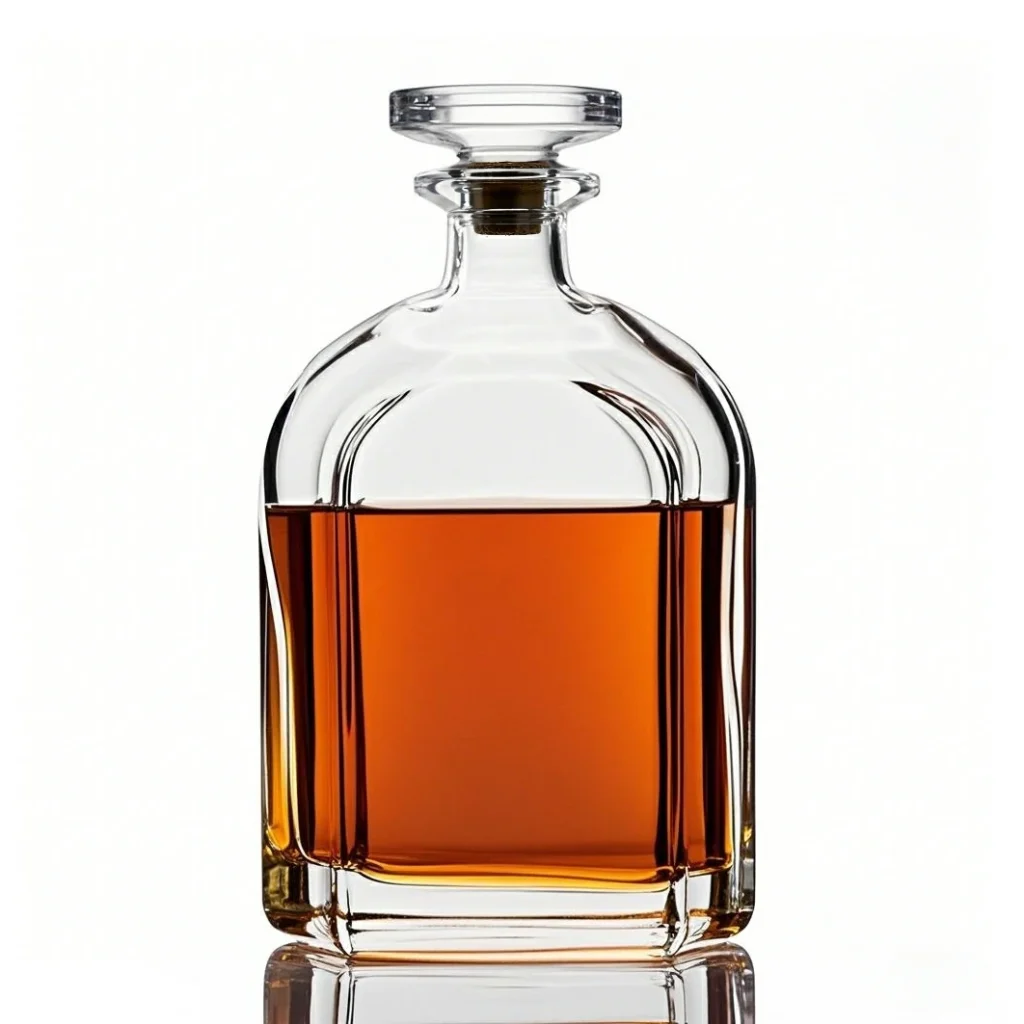
When a spirit is aged for decades, it often graduates from a standard bottle to a “Decanter.” This name implies a level of luxury and ritual, usually featuring heavy glass bases and ornate stoppers. Unlike a standard bottle designed for the shelf, a decanter is designed for the table. It is wide-bottomed to provide stability and often features intricate faceting to catch the light, highlighting the rich amber hues of aged brandy or bourbon.
Another specialized term is the “Carboy” or “Demijohn.” These are large, bulbous glass containers often encased in wicker or plastic for protection. While they are sometimes used for aesthetic display, their primary role is in the fermentation and bulk transport of wine and spirits. Because of their size, they represent the industrial side of the alcohol container name spectrum, focusing on volume and preservation rather than individual retail branding.
Technical Specifications of Glass Spirits Containers
Choosing the right vessel requires knowledge of technical dimensions and glass weights. The table below outlines the standard specifications for common liquor bottles used in global distribution.
| Container Name | Standard Volume | Typical Height | Primary Use Case |
| Miniature (Nip) | 50 ml | 100 – 120 mm | Samples, Airlines, Minibars |
| Flask | 200 ml / 375 ml | 150 – 180 mm | Portability, Personal use |
| Fifth (Standard) | 750 ml | 280 – 330 mm | Retail Standard, Premium spirits |
| Liter | 1,000 ml | 310 – 350 mm | Duty-free, High-volume bars |
| Handle (Magnum) | 1.75 L | 380 – 450 mm | Value size, Parties |
| Decanter | Various | Various | Luxury gifting, Table service |
The Importance of Glass Quality and Clarity
In the competitive spirits industry, the “Extra Flint” glass grade is the gold standard. This term refers to glass with the highest possible clarity and brilliance, achieved through low iron content. Brands that invest in custom glass bottles wholesale often specify this material to ensure their liquid looks as vibrant as possible. Clear glass allows the natural color of the spirit—whether it is the crystal-clear purity of silver tequila or the deep mahogany of an Oloroso cask-finished scotch—to shine through.
Clarity is not just about aesthetics; it is about perceived value. A bottle with a slight greenish or brownish tint is often seen as “economy” grade, whereas ultra-clear glass with a thick “push-up” or “punt” (the indentation at the bottom) suggests a high-end, heavy-weight product. This structural feature was originally designed for strength in sparkling wines but has become a symbol of prestige in the spirit bottle world.
Customization and Branding Through Glass
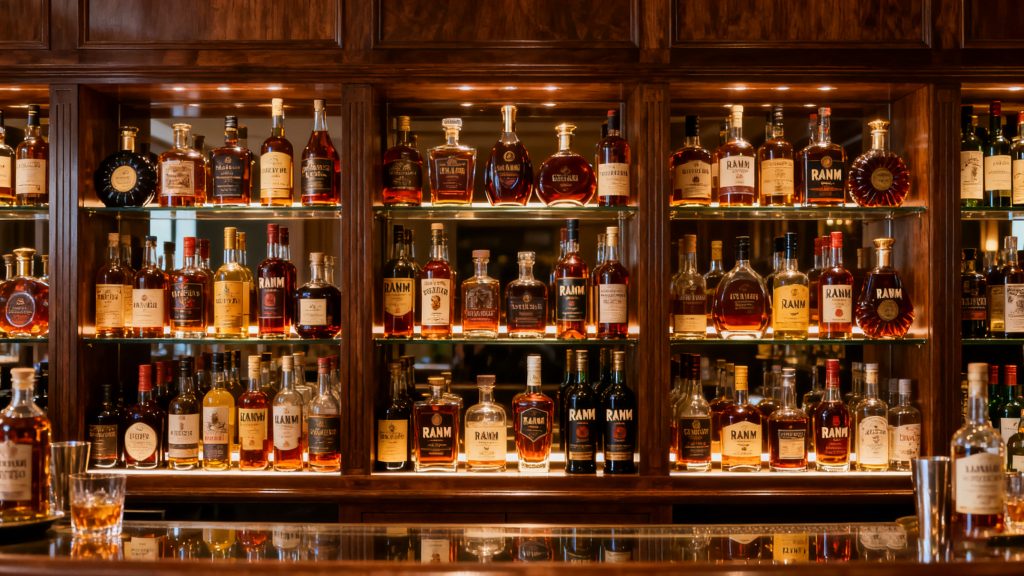
The modern alcohol container name is increasingly tied to bespoke design. Embossing, where a logo or brand name is raised directly on the glass surface, provides a tactile experience for the consumer. Acid etching or frosting can create a mysterious, “chilled” look for vodkas and liqueurs. These techniques are often integrated during the manufacturing process when ordering from a custom glass bottles wholesale provider.
Labeling also plays a role in the nomenclature. For instance, a “Paper-Labeled” bottle is traditional, but “Screen-Printed” or “ACL” (Applied Ceramic Label) bottles offer a modern, durable alternative where the label is fused to the glass. This ensures the branding remains pristine even when the bottle is kept in an ice bucket or high-humidity environment.
Sustainability and the Future of Glass Vessels
As the global focus shifts toward sustainability, the glass industry is innovating with “Lightweighting.” This process reduces the amount of glass used in each bottle without compromising its structural integrity. A lighter bottle reduces shipping costs and carbon emissions, which is a major selling point for eco-conscious brands. Additionally, the use of “Cullet” (recycled glass) is becoming a standard requirement in the custom glass bottles wholesale supply chain.
Despite the rise of aluminum cans and plastic pouches, the glass alcohol container name remains synonymous with tradition and quality. Glass is 100% recyclable and can be reused infinitely without loss in quality, making it the ultimate sustainable choice for the spirits industry. As we look to the future, we see a trend toward refillable glass programs where high-end decanters are kept for a lifetime and replenished from bulk sources.
The Psychology of Bottle Weight and Shape
There is a profound psychological impact associated with the weight of a bottle. Research shows that consumers often perceive a heavier bottle as containing a higher-quality product. This is why many premium whiskey brands use bottles with a massive glass base. The “Hand-feel” of the vessel contributes to the overall tasting experience, making the act of pouring as satisfying as the drink itself.
Shape also influences perception. Tall, slender bottles are often associated with elegance and femininity, making them popular for flavored liqueurs and floral gins. Square or heavy-set rectangular bottles suggest masculinity and sturdiness, a common choice for bold bourbons and scotches. By mastering the right alcohol container name and shape, a brand can communicate its entire identity before a single drop is tasted.