
.png)


.png)

Your 2026 Checklist: 7 Critical Factors for Sourcing Empty Cylinder Glass Drink Bottles for Artesian Still Water
Januar 5, 2026
Abstract
This analysis examines the critical factors involved in sourcing empty cylinder glass drink bottles for artesian still water, specifically for brands targeting the premium market in 2026. It articulates the significance of material selection, differentiating between soda-lime, super flint, and high borosilicate glass, and evaluates their respective impacts on product integrity, thermal stability, and aesthetic appeal. The discourse extends to the nuanced role of bottle design and customization in shaping consumer perception and brand identity, emphasizing how minimalist cylindrical forms communicate purity. Furthermore, the document investigates the functional importance of closure systems in preserving water quality. It also addresses the imperative of sustainability within the modern supply chain, the logistical and qualitative benchmarks for selecting a manufacturing partner, and the necessity of adhering to international safety and regulatory standards. The objective is to provide a comprehensive framework for beverage companies to make informed packaging decisions that align with brand values, market expectations, and long-term viability.
Key Takeaways
- Choose glass material based on thermal needs; borosilicate for hot-fill, super flint for clarity.
- A minimalist cylinder design inherently communicates the purity and quality of artesian water.
- Leverage deep customization services to embed your brand’s unique story directly onto the bottle.
- Select a closure system that guarantees a perfect seal to protect the water’s integrity.
- Partner with manufacturers who demonstrate robust quality control and international certifications.
- Understand the full customization process to effectively manage project timelines and costs.
- Sourcing the right empty cylinder glass drink bottles for artesian still water is an investment in brand equity.
Table of Contents
- Material Purity and Composition: The Foundation of Quality
- The Silent Language of Design: Why the Cylinder Resonates
- Brand Identity Through Customization: The Art of the Bespoke Bottle
- Sealing the Deal: Closure Systems and the Preservation of Purity
- The Sustainability Imperative: Glass as a Statement of Responsibility
- Vetting Your Manufacturing Partner: A Checklist for Excellence
- Navigating Global Markets: Compliance and Safety Standards
- FAQ
- References
Material Purity and Composition: The Foundation of Quality
The choice of a vessel for artesian still water is not a trivial matter of logistics; it is a foundational decision that speaks to the very essence of the product. Artesian water is defined by its purity, its journey through natural filters, and its unique mineral composition. The container tasked with holding such a pristine substance must, therefore, be more than a mere container. It must be a guardian, an inert and unblemished protector that preserves the water’s character from the source to the consumer’s lips. In the world of packaging, glass stands as the preeminent material for this purpose, but not all glass is created equal. Understanding the distinctions between different glass compositions is the first and perhaps most vital step for any brand seeking to project an image of premium quality.
Soda-Lime Glass: The Ubiquitous Standard
When we think of glass, we are most often thinking of soda-lime glass. It is the workhorse of the glass industry, comprising the vast majority of manufactured glass. Its primary constituents—silica (sand), soda (sodium carbonate), and lime (calcium oxide)—are abundant and relatively inexpensive, making it an economically viable choice for a wide range of applications, from windows to food jars. For water bottling, a refined version known as “super flint” or “high white” glass is often employed. This type of soda-lime glass is manufactured with a lower iron content, which reduces the greenish tint often visible in standard glass, resulting in exceptional clarity and brilliance.
The appeal of super flint glass for an empty cylinder glass drink bottle for artesian still water is primarily aesthetic. Its crystal-clear nature showcases the water within, allowing its perceived purity to be the hero. For a product like still water, where visual clarity is synonymous with quality, this is a powerful marketing tool. However, soda-lime glass has its limitations. Its primary vulnerability lies in its susceptibility to thermal shock. Rapid and extreme temperature changes can cause it to crack or shatter. This is generally not a concern for still water, which is bottled at ambient temperatures, but it is a factor to consider if the bottling process involves any significant temperature fluctuations.
High Borosilicate Glass: The Resilient Virtuoso
In contrast to soda-lime glass, high borosilicate glass represents a leap forward in thermal and chemical resistance. Its composition includes boron trioxide, which fundamentally alters its atomic structure, creating a material with a very low coefficient of thermal expansion. What does this mean in practical terms? It means that a high borosilicate glass bottle can withstand dramatic temperature swings without stress. It can go from holding a chilled beverage to being washed in hot water without risk. This resilience is why borosilicate glass is the material of choice for laboratory equipment and high-end kitchenware.
For artesian water brands, the advantages of high borosilicate glass are twofold. First, its superior durability and resistance to breakage can lead to fewer losses during production and transport. Second, and more subtly, its reputation as a high-performance, technical material lends an additional layer of perceived quality to the product. While it is more expensive to produce than soda-lime glass, the investment can be justified for ultra-premium brands that wish to communicate an uncompromising commitment to quality in every aspect of their product. Its chemical durability is also superior, ensuring absolutely no leaching of minerals from the glass into the water over time, preserving the water’s intended taste profile with perfect fidelity (Zhonghai, 2025).
A Comparative Analysis for Informed Decision-Making
To assist in this critical decision, consider the following comparison between the primary glass types suitable for water bottles. This table helps to clarify the trade-offs between cost, aesthetics, and performance.
| Merkmal | Super Flint (Soda-Lime) Glass | Hoch Borosilikatglas |
|---|---|---|
| Primary Composition | Silica, Soda, Lime | Silica, Boron Trioxide |
| Clarity | Excellent, crystal-clear appearance. | Exceptional, often perceived as more brilliant. |
| Thermal Resistance | Moderate. Susceptible to thermal shock. | High. Can withstand temperatures from -30°C to 300°C. |
| Chemische Beständigkeit | Good. Generally inert for water. | Excellent. Highly resistant to chemical corrosion. |
| Schlagfestigkeit | Standard. | Higher than soda-lime glass. |
| Cost | More economical. | Higher initial investment. |
| Best Use Case | Premium still water bottled at ambient temperatures. | Ultra-premium brands, hot-fill beverages, or brands emphasizing durability. |
Ultimately, the choice between super flint and high borosilicate glass is a strategic one. It requires a brand to reflect on its identity, its price point, and the story it wants to tell. Is the brand’s narrative centered on accessible, natural purity, for which the pristine clarity of super flint glass is a perfect match? Or is it one of technical perfection and ultimate preservation, where the superior performance of high borosilicate glass becomes a key part of the value proposition?
The Silent Language of Design: Why the Cylinder Resonates
After the fundamental choice of material, the form of the bottle itself becomes the next critical consideration. The shape of a package is a powerful, non-verbal communicator, capable of conveying complex ideas about a product’s identity, quality, and purpose before a single word of a label is read. For artesian still water, the simple, elegant geometry of the cylinder has become an archetypal form, and for good reason. Its design speaks a language of purity, simplicity, and modernity that aligns perfectly with the values of the premium water market.
The Psychology of Simplicity
The cylinder is one of the most basic and harmonious of geometric shapes. It is devoid of complexity, sharp angles, or unnecessary ornamentation. This inherent simplicity is its greatest strength. In a world saturated with visual noise and elaborate marketing, a clean, minimalist design can cut through the clutter and create a sense of calm and clarity. When a consumer sees a simple cylindrical glass bottle on a shelf, the immediate, subconscious association is with purity and honesty. The bottle does not need to shout for attention with a contrived shape; its quiet confidence suggests that the quality of the product within speaks for itself.
This psychological effect is particularly potent for artesian water. The product’s core appeal lies in its natural, untouched state. A simple cylindrical form mirrors this concept. It suggests that nothing has been added and nothing has been taken away. The bottle becomes a transparent window, not just literally but metaphorically, into the pristine source of the water. The classic Voss bottle is a prime example of this principle in action; its iconic cylindrical design helped to establish it as a leader in the premium water space, largely on the strength of its packaging (Zhonghai, n.d.-c).
Functional Elegance and Branding Canvas
Beyond its psychological appeal, the cylinder is also a highly functional shape. Its smooth, continuous surface is easy to hold, and its stable base makes it practical for both consumers and retailers. From a production standpoint, cylindrical bottles are generally more straightforward to manufacture, handle, and label, which can contribute to efficiency and cost-effectiveness.
Moreover, the cylinder provides an ideal canvas for branding. Its uninterrupted surface allows for a wide range of decorative possibilities, from a full-wrap label to a minimalist, screen-printed logo. This versatility allows brands to tailor the bottle’s final look to their specific identity. A brand might choose to leave the majority of the glass exposed, using only a small, elegant logo to emphasize the water’s clarity. Another might opt for a frosted finish to create a cool, tactile sensation, or use subtle embossing to add a touch of sophisticated detail. The custom water glass bottle becomes a medium for storytelling, and the cylinder is the most versatile and elegant page on which to write that story.
The Cylinder in the 2026 Market
As we look toward 2026, the trend towards minimalism and authenticity in branding is only set to intensify. Consumers, particularly in the premium and wellness sectors, are increasingly skeptical of ostentatious marketing and are drawn to brands that project honesty and transparency. The empty cylinder glass drink bottle for artesian still water is perfectly positioned to meet this demand. Its timeless form resists fleeting trends, suggesting a product of enduring quality.
For a brand entering or competing in this market, embracing the cylinder is not a matter of following a trend, but of understanding a fundamental principle of design psychology. It is about choosing a form that is in perfect harmony with the product it contains. The bottle ceases to be mere packaging and becomes an integral part of the product experience, a silent ambassador for the purity, quality, and integrity of the artesian water inside.
Brand Identity Through Customization: The Art of the Bespoke Bottle
While the cylindrical form provides an ideal foundation, it is through customization that a brand can truly distinguish itself and transform a simple vessel into a unique and memorable icon. In the competitive landscape of the beverage market, an off-the-shelf bottle is no longer sufficient for a brand with premium aspirations. True brand identity is forged in the details. A bespoke bottle, tailored to the specific vision of the brand, becomes a powerful asset, a physical manifestation of the brand’s story, values, and commitment to quality. This is where partnering with a manufacturer that offers comprehensive OEM (Original Equipment Manufacturer) and ODM (Original Design Manufacturer) services becomes indispensable.
The Journey from Concept to Creation
The process of creating a custom glass bottle is a collaborative journey between the brand and the manufacturer. It is a multi-stage process that requires expertise, precision, and clear communication at every step. Understanding this process is crucial for any brand manager or entrepreneur looking to develop their own unique packaging.
- Idea and Inquiry: The journey begins with a vision. The brand provides the manufacturer with its initial concept, which might include sketches, inspiration images, and specifications regarding capacity, shape, and desired aesthetic.
- Design and Quotation: The manufacturer’s design team translates this initial idea into a technical proposal. They provide a quote based on the complexity of the design, the chosen material, and the order volume.
- Technical Drawings and 3D Modeling: Once the proposal is accepted, the real design work begins. Professional designers create detailed technical drawings and 3D models of the bottle. This allows the brand to visualize the final product from all angles and make any necessary refinements before committing to physical production.
- Mold Creation: This is one of the most critical and investment-heavy stages. Based on the approved drawings, a high-precision mold is created. The quality of this mold will determine the quality and consistency of every bottle produced. A well-crafted mold is an investment that pays dividends in the form of a flawless finished product. The cost of a custom mold can range significantly, but it is a necessary expense for creating a truly unique bottle (Feemio, 2025).
- Sampling: Before mass production begins, the manufacturer produces a small batch of samples using the new mold. These samples are sent to the brand for final approval. This is the opportunity to hold the physical bottle, test it with the chosen cap and label, and ensure that it meets every expectation.
- Mass Production and Quality Control: With the sample approved, the factory moves into full-scale production. Throughout this process, rigorous quality control measures are essential. These include tests for thermal shock resistance, impact strength, and dimensional accuracy to ensure that every bottle meets the agreed-upon standards.
- Deep Processing and Decoration: The final stage is where the bottle’s personality is truly brought to life. “Deep processing” refers to the wide array of decorative techniques that can be applied to the glass.
A Palette of Decorative Techniques
The options for decorating a glass bottle are vast, each offering a different aesthetic and tactile experience. A skilled manufacturer can offer a wide portfolio of these techniques, allowing a brand to create a multi-sensory experience for the consumer.
| Decoration Technique | Description | Best For |
|---|---|---|
| Screen Printing | Ink is applied directly to the glass surface through a mesh screen. Allows for precise, detailed, and durable logos and text. | Creating crisp, minimalist branding directly on the glass. |
| Decal Application | A pre-printed design is transferred onto the bottle and then fired in a kiln, fusing it permanently to the glass. | Intricate, multi-color designs and photographic imagery. |
| Frosting (Acid Etching) | The glass is treated with an acid to create a matte, translucent finish. Provides a premium, tactile feel and a “chilled” look. | Evoking a sense of coolness and sophistication. |
| Color Spraying | The bottle is coated with a layer of colored paint, which can be transparent, opaque, or have a gradient effect. | Achieving a specific brand color that is not available in the raw glass material. |
| Embossing/Debossing | The design is raised (embossed) or indented (debossed) directly into the glass during the molding process. | Adding subtle, high-end texture and branding that can be felt. |
| Hot Stamping | A metallic foil is applied to the glass using heat and pressure. | Adding luxurious metallic accents (gold, silver, etc.) to logos and details. |
By combining a unique mold shape with one or more of these deep processing techniques, a brand can create a packaging solution that is truly its own. An empty cylinder glass drink bottle for artesian still water can be transformed from a simple container into a piece of art that enhances the perceived value of the product and creates a lasting impression on the consumer. This level of customization is the hallmark of a premium brand and a testament to the power of thoughtful design.
Sealing the Deal: Closure Systems and the Preservation of Purity
The final, and functionally most critical, component of any bottle is its closure. The cap or cork is the gatekeeper, the element responsible for protecting the integrity of the water within. For artesian still water, the role of the closure is twofold: it must provide a perfect, hermetic seal to prevent any contamination or loss of quality, and it must contribute to the overall aesthetic and user experience of the product. An inadequate seal can compromise the very purity that defines artesian water, while a poorly designed cap can detract from the premium experience the brand seeks to create. The choice of closure is, therefore, not an afterthought but a decision that requires careful consideration of both function and form.
The Imperative of the Hermetic Seal
Still water, unlike its sparkling counterpart, does not have the internal pressure of carbonation to help maintain the seal of its cap. This makes the quality of the closure system even more critical. The primary function of the cap is to create a hermetic seal, one that is completely airtight. This prevents two major problems:
- Contamination: An imperfect seal can allow microorganisms, airborne particles, or ambient odors to enter the bottle, compromising the water’s purity and potentially altering its taste.
- Evaporation: While a slow process, a poor seal can allow for gradual evaporation, especially over a long shelf life, leading to a slight reduction in volume.
To achieve a reliable seal, modern bottles rely on precision engineering in both the bottle’s “finish” (the threaded or shaped area at the top) and the cap itself. High-quality caps, particularly screw caps, incorporate a liner made from a soft, pliable material. When the cap is tightened, this liner compresses against the rim of the bottle finish, filling any microscopic imperfections and creating a perfect, airtight barrier.
A Survey of Closure Options
Several types of closures are commonly used for water bottles, each with its own set of advantages in terms of function, aesthetics, and cost.
- Screw Caps: This is the most common and arguably most practical closure for water bottles. They are easy for consumers to open and reseal, and when well-made, they provide an exceptionally reliable seal. Screw caps are available in a variety of materials, with aluminum and plastic being the most prevalent.
- Aluminum Screw Caps: These offer a premium look and feel. They can be colored, embossed, or printed to match the brand’s identity, adding a touch of sophistication. Their metallic finish often complements the clear, pure look of a glass bottle.
- Plastic Screw Caps: A more cost-effective option, plastic caps are highly versatile and can be produced in any color. While sometimes perceived as less premium than aluminum, high-quality, well-designed plastic caps can be both functional and aesthetically pleasing.
- Corks and Stoppers: Traditionally associated with wine and spirits, corks can be used to create a very high-end, artisanal feel for a water bottle.
- Natural Cork: Offers a classic, rustic appeal, suggesting a connection to nature. However, ensuring a perfect and consistent seal can be more challenging than with a screw cap, and there is a small risk of “cork taint” affecting the water’s taste.
- Synthetic Corks/Glass Stoppers: These provide the aesthetic of a cork with greater reliability and neutrality. A glass stopper with a silicone seal, for example, can create a beautiful, minimalist look while providing an excellent seal.
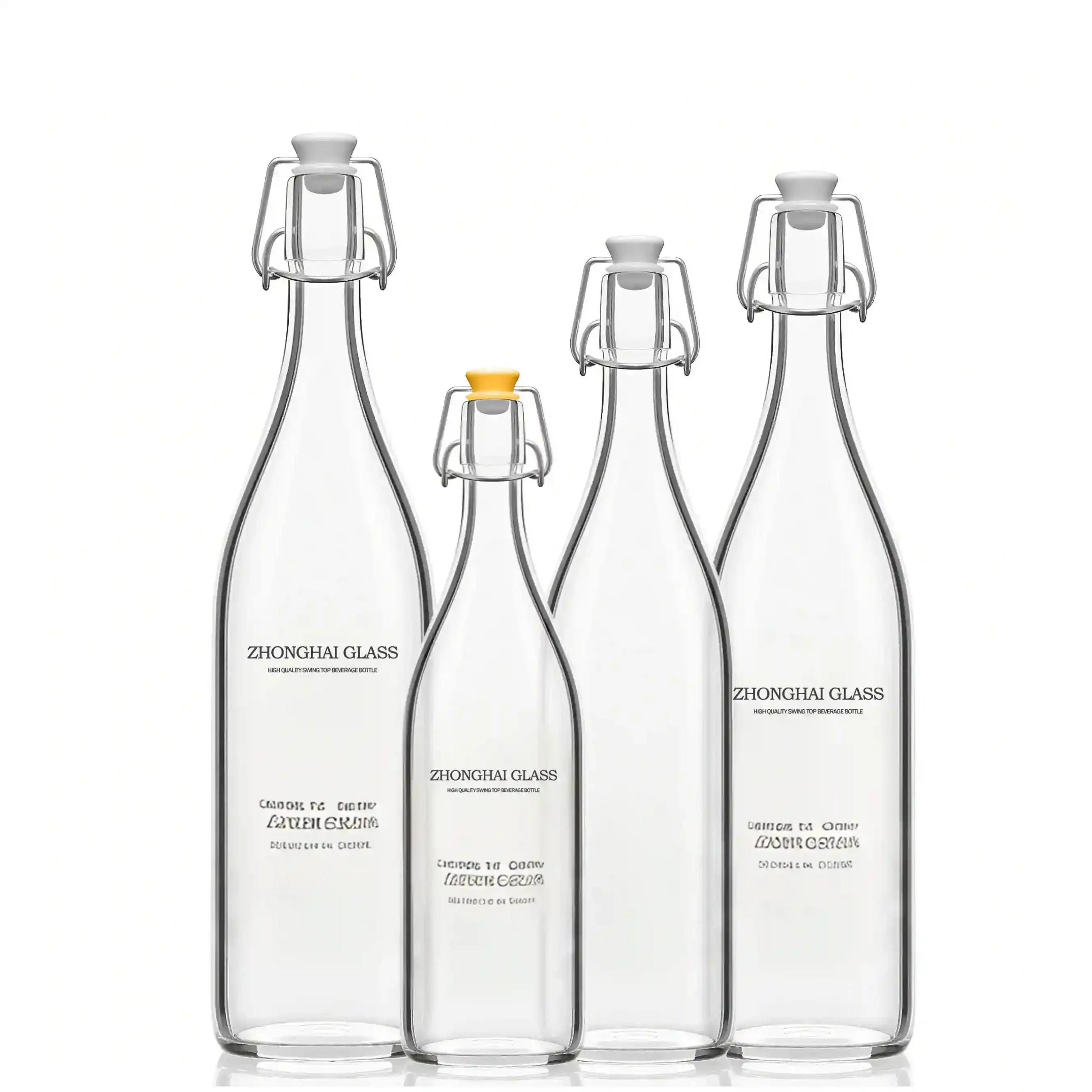
- Swing-Top (Grolsch-Style) Closures: This system, featuring a wire bail and a rubber gasket, provides a vintage, reusable appeal. It creates an excellent seal and is highly satisfying for the consumer to open and close. While less common for single-use water bottles due to its higher cost, it is an excellent choice for larger format, multi-serving bottles intended for home or restaurant use, as it strongly encourages reuse (Zhonghai, n.d.-c).
The choice of closure should be made in concert with the overall bottle design. A minimalist bottle might be best served by a simple, elegant aluminum screw cap. A brand with an eco-conscious, rustic identity might find a natural cork to be the perfect finishing touch. The key is to ensure that the chosen closure not only looks the part but also performs its primary function flawlessly, guaranteeing that the artesian water inside remains as pure as the day it was bottled.
The Sustainability Imperative: Glass as a Statement of Responsibility
In the conscious consumer landscape of 2026, a brand’s commitment to environmental responsibility is no longer a bonus feature but a core expectation. The packaging of a product has become a prominent symbol of this commitment, and in this arena, glass possesses an inherent and powerful advantage. Choosing an empty cylinder glass drink bottle for artesian still water is not just a choice for quality and aesthetics; it is a clear and demonstrable statement of sustainability. This message resonates deeply with modern consumers and can become a cornerstone of a brand’s identity and marketing narrative.
The Infinite Recyclability of Glass
The most compelling aspect of glass from a sustainability perspective is its infinite recyclability. Unlike plastics, which degrade in quality each time they are recycled (a process known as downcycling), glass can be melted down and reformed into new bottles and jars over and over again, with no loss of purity or quality. This creates a true closed-loop system, a perfect example of a circular economy in action.
The environmental benefits of this process are substantial. According to industry data, every 10% of recycled glass (known as cullet) used in the manufacturing process reduces energy consumption by approximately 3% and carbon emissions by about 5% (Feemio, 2025). By using recycled materials, manufacturers can lower the temperature needed in their furnaces, saving significant amounts of energy and reducing their carbon footprint. Furthermore, using cullet reduces the need to quarry virgin raw materials like sand and limestone, preserving natural landscapes and resources.
A brand that packages its water in glass can proudly communicate these facts to its customers. The bottle itself becomes a tangible piece of evidence of the brand’s commitment to a circular economy, a concept that is increasingly understood and valued by the public.
Purity, Health, and the Rejection of Plastic
The conversation around sustainability is also inextricably linked to health. Growing public awareness of the potential health risks associated with plastics, such as the leaching of chemicals like BPA and microplastics into food and beverages, has driven a significant consumer shift towards glass. Glass is made from natural, inert materials. It is non-porous and impermeable, meaning it does not react with the contents it holds. There is no risk of chemical leaching, ensuring that the water inside remains as pure and healthy as its source.
This health-conscious aspect of glass reinforces its sustainable appeal. A brand choosing glass is making a choice not only for the health of the planet but also for the health of its customers. This dual benefit is a powerful marketing message that can build deep trust and loyalty. The decision to use a glass bottle is a decision to reject single-use plastics and their associated environmental and health concerns, a stance that aligns with the values of a growing and influential segment of the market.
Leveraging Sustainability in Branding
For a brand of artesian still water, sustainability is not just a talking point; it is a narrative that is woven into the very fabric of the product’s identity. Artesian water is a product of nature, and the brand that sells it has a responsibility to be a steward of nature. Using glass packaging is one of the most visible and impactful ways to demonstrate this stewardship.
Brands can leverage this in their marketing and on their packaging in several ways:
- On-Label Messaging: Simple icons or short statements on the label, such as “Infinitely Recyclable” or “Please Recycle Me,” can serve as constant reminders of the package’s environmental credentials.
- Digital Storytelling: The brand’s website and social media channels can tell a deeper story about why they chose glass, explaining the benefits of the circular economy and the importance of protecting the planet’s water sources.
- Partnerships: Collaborating with environmental organizations or supporting local recycling initiatives can further solidify the brand’s sustainable identity.
By choosing glass, a brand is not just selecting a container. It is adopting a philosophy. It is aligning itself with a future that values preservation, purity, and responsibility. The empty cylinder glass drink bottle for artesian still water becomes more than a package; it becomes a symbol of a better, more sustainable choice.
Vetting Your Manufacturing Partner: A Checklist for Excellence
The vision for a perfect bottle, no matter how brilliant, can only be realized through the capabilities of a manufacturing partner. The selection of this partner is one of the most consequential decisions a beverage brand will make. A great manufacturer acts as an extension of the brand, a collaborator dedicated to bringing a concept to life with precision and quality. A poor partner, on the other hand, can lead to delays, quality issues, and ultimately, a product that fails to meet expectations. For brands in the USA, Russia, and Europe looking to source from a leading manufacturing hub like China, a thorough vetting process is essential. This checklist outlines the key attributes of an excellent manufacturing partner.
A Manufacturer Vetting Checklist
| Area of Evaluation | Key Questions to Ask | What to Look For (The Green Flags) |
|---|---|---|
| Experience and Specialization | How many years have you been in business? What types of bottles are your specialty? Can you share case studies of brands you have worked with? | A proven track record of at least a decade. Specialization in your product category (e.g., premium beverage bottles). A portfolio of successful projects with recognizable brands. |
| Production Capacity and Technology | What is your daily production capacity? What kind of machinery do you use? Is your production line automated? | High capacity (e.g., 800,000+ units per day) indicates scale and efficiency. Use of modern CNC machinery and automated lines ensures precision and consistency. |
| Customization (OEM/ODM) Capabilities | Can you walk me through your full OEM/ODM process? Do you have an in-house design team? What is the typical lead time for mold creation and sampling? | A clear, well-defined process from design to delivery. An experienced in-house design and engineering team. Realistic and transparent timelines. |
| Quality Control Systems | What specific quality control checks do you perform? At what stages of production are these checks done? Can you provide your quality assurance documentation? | Multi-stage inspections: raw material checks, in-process monitoring, and final product testing (e.g., for thermal shock, stress, capacity). ISO certifications or similar quality management standards. |
| Material Sourcing and Range | Where do you source your raw materials? What types of glass can you work with (e.g., Super Flint, High Borosilicate)? | Transparent sourcing of high-purity raw materials. The ability to offer a range of glass types to suit different product needs and price points. |
| Communication and Support | Will I have a dedicated account manager? How do you handle communication across different time zones? What is your after-sales support policy? | A dedicated, English-speaking point of contact. Proactive communication and responsiveness. A clear policy for addressing any issues post-delivery. |
| Logistics and Export Experience | Do you have experience exporting to my region (USA, Europe, Russia)? How do you package bottles for safe international shipment? Can you assist with logistics and customs? | Extensive experience shipping to your target market. Robust packaging methods (e.g., palletized, layer-padded cartons) to minimize breakage. The ability to offer logistical support. |
The Value of a True Partnership
Beyond the technical specifications and production numbers, the ideal relationship with a manufacturer is a partnership. This involves a level of trust and collaboration that goes beyond a simple transactional exchange. A true partner, like glass bottle suppliers, invests in understanding your brand’s vision. They offer proactive advice, help troubleshoot potential design flaws, and suggest materials or techniques that could enhance the final product or optimize costs.
For example, a brand might propose a design with a very sharp, thin edge. A good manufacturing partner would not just blindly produce it; they would advise that this design might be prone to chipping and suggest a slight modification to improve durability without compromising the aesthetic. This collaborative approach is invaluable, especially for brands that may be new to the complexities of glass production.
When vetting potential manufacturers, pay close attention to the quality of the communication. Are they merely answering your questions, or are they engaging with your project, asking insightful questions of their own, and demonstrating a genuine interest in your success? The manufacturer you choose will be responsible for producing the most tangible representation of your brand. It is a decision that warrants diligence, research, and a focus on finding a partner who is as committed to quality as you are.
Navigating Global Markets: Compliance and Safety Standards
For any brand of artesian water with international ambitions, the final hurdle is ensuring that its product and packaging meet the stringent safety and regulatory standards of its target markets. A beautifully designed bottle and a pristine product are worthless if they are rejected at the border or recalled from shelves due to non-compliance. Navigating the complex web of international regulations is a critical function, and it is another area where the choice of manufacturing partner is paramount. An experienced, certified manufacturer will not only produce a safe product but will also provide the necessary documentation to ensure smooth entry into markets like the United States, the European Union, and Russia.
The Foundation: Food-Grade Materials
The most fundamental requirement for any packaging that comes into contact with a food or beverage product is that it must be made from “food-grade” materials. In the context of glass, this primarily means that the composition must be free from harmful heavy metals, most notably lead and cadmium. These elements, if present in the glass formula or in the decorations applied to it, could potentially leach into the water over time, posing a serious health risk to consumers.
A reputable manufacturer guarantees the use of lead-free, food-grade raw materials and inks. They should be able to provide certification from independent testing laboratories to verify this. For example, standards like the U.S. FDA’s CPG Sec. 545.400 and 545.450 set specific limits for leachable lead and cadmium from ceramic and glass foodware. Compliance with these standards is not optional; it is a prerequisite for market access.
Major Regulatory Frameworks
While the specific regulations can vary from country to country, the core principles of food contact material safety are largely harmonized. Brands targeting the US, EU, and Russian markets need to be aware of the key frameworks.
- United States (FDA): In the U.S., the Food and Drug Administration (FDA) is the primary regulatory body. Glass is generally recognized as safe (GRAS) for food contact, provided it is of a suitable purity and does not impart any harmful substances to the food. Manufacturers supplying the U.S. market must be able to demonstrate that their products meet these standards.
- European Union (EC): The EU has a comprehensive framework for food contact materials, outlined in Regulation (EC) No 1935/2004. This regulation lays down the general principle that materials must not transfer their constituents to food in quantities that could endanger human health or bring about an unacceptable change in the composition of the food. Specific directives for glass and ceramics (Directive 84/500/EEC) set migration limits for lead and cadmium.
- Eurasian Economic Union (EAEU), including Russia: The EAEU has its own set of technical regulations concerning the safety of packaging (TR CU 005/2011). These regulations also establish requirements for materials and articles intended for contact with food, including limits on the migration of harmful substances.
The Manufacturer’s Role in Compliance
It is not the responsibility of the beverage brand to become an expert in the minutiae of every international regulation. It is, however, their responsibility to choose a manufacturing partner who is. An experienced global manufacturer will have:
- A Portfolio of Certifications: They should readily provide copies of their certifications, such as ISO 9001 (for quality management) and certifications of compliance with FDA, EC, or other relevant standards.
- A Dedicated Compliance Team: Larger manufacturers often have a team dedicated to staying up-to-date with a changing global regulatory landscape.
- Traceability: They should maintain records that allow for the full traceability of the raw materials used in every batch of production.
- Experience with Documentation: They will be familiar with the specific documentation required by customs authorities in different regions and can provide a “Declaration of Compliance” or other necessary paperwork to accompany the shipment.
By partnering with a manufacturer who has a proven track record of exporting to these major markets, a brand can significantly de-risk its international expansion. The manufacturer’s expertise in compliance provides peace of mind, allowing the brand to focus on what it does best: marketing and selling its premium artesian water. The safety and compliance of the packaging become a given, a foundational element of quality guaranteed by a trusted partner.
FAQ
What is the main difference between super flint glass and high borosilicate glass for a water bottle? The primary difference lies in their thermal and chemical resistance. Super flint glass, a type of high-clarity soda-lime glass, is perfect for showcasing the purity of still water bottled at ambient temperatures. High borosilicate glass contains boron trioxide, allowing it to withstand extreme temperature changes, making it ideal for hot-fill processes or for brands wanting to emphasize maximum durability and chemical inertness.
Why is a cylinder shape so popular for premium water bottles? The cylinder’s minimalist and harmonious geometry subconsciously communicates purity, simplicity, and honesty. Its clean lines provide a sense of calm and suggest the product within is of high quality and needs no elaborate packaging to prove it. It also serves as a versatile and elegant canvas for branding.
What does the OEM/ODM process for a custom bottle typically involve? The process is a collaborative journey that moves from your initial idea and inquiry to technical drawings and 3D modeling, followed by the creation of a precision mold. After you approve physical samples from that mold, the manufacturer proceeds with mass production, quality control, and any final decorative processes like frosting or screen printing.
How much does it cost to create a custom mold for a glass bottle? The cost can vary widely, from several thousand to tens of thousands of dollars, depending on the complexity of the design and the manufacturer. While it is a significant initial investment, a custom mold is essential for creating a unique bottle that embodies your brand identity and provides a long-term competitive advantage.
What kind of cap provides the best seal for still water? A high-quality aluminum or plastic screw cap with a soft liner generally provides the most reliable and hermetic seal for still water. The liner compresses against the bottle’s rim to create an airtight barrier, preventing any contamination or loss of quality.
Is glass packaging truly a sustainable option? Yes, glass is one of the most sustainable packaging options available. It is made from natural materials and is 100% and infinitely recyclable without any loss of quality or purity. Using recycled glass in manufacturing also significantly reduces energy consumption and carbon emissions.
How can I ensure the glass bottles I import meet US or EU safety standards? Partner with a manufacturer who can provide robust documentation of their compliance. This includes certifications for using food-grade, lead-free materials and test reports showing that the bottles meet the specific migration limits for harmful substances as required by the FDA in the U.S. and Regulation (EC) No 1935/2004 in the EU.
What is a typical Minimum Order Quantity (MOQ) for custom glass bottles? MOQs vary by manufacturer and the complexity of the bottle. For existing designs, it might be as low as 1,000 units. For a fully custom bottle requiring a new mold, MOQs are typically higher, often starting from 6,000 to 12,000 units or more to make the production run economically viable.
The journey of selecting the perfect empty cylinder glass drink bottle for artesian still water is a thoughtful process that extends far beyond simple procurement. It is an exercise in brand building, a commitment to quality, and a statement of values. Each decision—from the molecular structure of the glass to the subtle curve of the bottle’s shoulder and the precise torque of its cap—contributes to a cohesive narrative. This narrative is one of purity, elegance, and responsibility. By carefully considering the interplay of material science, design psychology, manufacturing precision, and sustainable principles, a brand can create a vessel that does more than just hold water. It can create a package that protects, elevates, and ultimately defines the premium experience for the consumer, ensuring that every sip is a testament to the quality promised and delivered.
References
Feemio. (2025, March 14). Top 10 glass packaging manufacturers in China [2025 …]https://www.feemio.com/top-10-glass-packaging-manufacturers-in-china.html
Global Bottles and Jars. (n.d.). Wholesale & buy customized cosmetics packagings. Retrieved from
Navigator Glass. (n.d.). Home. Retrieved from
Zhonghai. (n.d.-a). China OEM/ODM high borosilicate glass bottle supplier. Zhonghai (Tianjin) International Trade Co., Ltd. Retrieved from https://www.zhonghaiglass.com/high-borosilicate-glass-bottle-category/
Zhonghai. (n.d.-b). China OEM/ODM wine glass bottle supplier. Zhonghai (Tianjin) International Trade Co., Ltd. Retrieved from https://www.zhonghaiglass.com/wine-glass-bottle-category/
Zhonghai. (n.d.-c). China OEM/ODM water glass bottle supplier. Zhonghai (Tianjin) International Trade Co., Ltd. Retrieved from https://www.zhonghaiglass.com/water-glass-bottle-category/
Zhonghai. (2025, May 1). Zhonghai (Tianjin) International Trade Co., Ltd. Retrieved from https://www.zhonghaiglass.com/