
.png)


.png)

5 Data-Backed Reasons How Glass Bottles Preserve Flavor in Premium Spirits
December 8, 2025
Abstract
The selection of appropriate packaging is a determining factor in the preservation of a spirit's intended sensory profile. This analysis examines the scientific principles that establish glass as the superior material for bottling distilled spirits. The inherent chemical inertness of glass, primarily composed of a stable silicon dioxide matrix, prevents the leaching of unwanted substances and the "scalping" of delicate flavor compounds, thereby maintaining the purity of the contents. Its physical structure renders it impermeable to gases like oxygen, mitigating oxidative reactions that degrade aromatic molecules and alter the spirit's character. Furthermore, the material's non-porous surface is impervious to evaporation, ensuring the stability of the alcohol-by-volume ratio. The incorporation of metallic oxides to create colored glass provides critical protection against photodegradation by absorbing harmful ultraviolet wavelengths. Glass also exhibits favorable thermal stability, moderating the effects of temperature fluctuations. These combined properties demonstrate that glass bottles are not merely containers but active guardians of flavor and quality.
Key Takeaways
- Glass is chemically inert, which prevents it from reacting with or altering the spirit's flavor.
- The impermeable nature of glass protects against both flavor-dulling oxygen and alcohol evaporation.
- Colored glass, such as amber or green, shields sensitive spirits from degradation caused by UV light.
- Understanding how glass bottles preserve flavor is fundamental to maintaining brand quality and consistency.
- The non-porous and easily sanitized surface of glass guarantees the purity of the spirit.
- Glass provides excellent thermal stability, protecting the contents from rapid temperature changes.
Table of Contents
- A Guardian of Character: Why the Bottle is as Important as the Barrel
- Reason 1: Chemical Inertness as the Cornerstone of Purity
- Reason 2: Impermeability as a Fortress Against Degradation
- Reason 3: Light Protection as a Shield Against Photodegradation
- Reason 4: Thermal Stability for Maintaining Equilibrium
- Reason 5: Purity and Hygiene as the Final Seal of Quality
- Frequently Asked Questions (FAQ)
- The Enduring Clarity of Glass
- References
A Guardian of Character: Why the Bottle is as Important as the Barrel
The journey of a fine spirit is one of profound transformation. It begins with humble raw materials—grains, fruits, or sugarcane—and through the patient arts of fermentation and distillation, it becomes a liquid of remarkable complexity. For aged spirits like whiskey or brandy, this journey continues for years, sometimes decades, in the quiet solitude of an oak barrel, where it mellows, deepens, and gathers a symphony of nuanced aromas and tastes. After all this time, effort, and artistry, the spirit reaches its final destination before the consumer: the bottle. It is tempting to view this vessel as a mere container, a simple mode of transport. Yet, to do so would be to overlook its profound role. The bottle is the spirit's silent guardian, the final custodian of its character, tasked with preserving the precise balance and integrity painstakingly achieved by the distiller.
The choice of material for this guardian is not a trivial matter of aesthetics or cost alone. It is a scientific decision rooted in chemistry and physics. While modern packaging offers a panoply of options, from plastics to metals, the spirits industry has overwhelmingly and steadfastly remained loyal to glass. Why has this ancient material, forged from sand, soda ash, and limestone, endured as the unequivocal standard for premium spirits? The answer lies in its unique constellation of properties, which collectively work to create a stable, protective, and neutral environment. This exploration will delve into the five data-backed reasons how glass bottles preserve flavor, examining the material science that makes a simple glass bottle the most effective sentinel for the world’s finest whiskies, vodkas, gins, and rums. We will move from its molecular stability to its role as a barrier against the invisible forces of the environment, building a comprehensive understanding of this crucial partnership between spirit and glass.
Reason 1: Chemical Inertness as the Cornerstone of Purity
The very first duty of a container is to contain, but its higher calling, especially for-consumables, is to do no harm. A spirit is a delicate chemical balance, a solution of ethanol, water, and hundreds of volatile aromatic compounds. Any interaction with its container risks upsetting this balance. Herein lies the first and most fundamental virtue of glass: its chemical inertness.
Understanding Chemical Contamination in Storage
Imagine pouring a pristine, 18-year-old single malt scotch into a container that slowly leaches a faint, plastic-like taste into the liquid. The damage is irreversible. The spirit is compromised. This phenomenon, known as leaching, is a primary concern with many packaging materials. Plastics, for instance, are long-chain polymers that often contain additives like plasticizers (e.g., phthalates) to give them flexibility. Over time, these smaller molecules can migrate from the plastic into the spirit, imparting undesirable flavors and aromas (García, Losada, & Domínguez, 2021).
Metals present a different, though equally problematic, challenge. While food-grade stainless steel is quite stable, other metals can catalyze oxidative reactions or leach metallic ions into the spirit, resulting in a harsh, metallic tang. An illustrative, albeit extreme, historical example is the use of leaded crystal decanters. For centuries, these beautiful objects were prized for their brilliance and heft, but it is now widely understood that the lead oxide in the glass can leach into acidic or alcoholic solutions, posing both a health risk and altering the taste. The inert nature of modern soda-lime-silica glass, used for commercial bottling, is what separates it from these reactive alternatives.
The Molecular Stability of Glass
To appreciate why glass is so non-reactive, we must look at its atomic structure. The primary component of a typical spirits bottle is silicon dioxide (SiO₂), the same compound found in quartz sand. During manufacturing, sand is heated to extreme temperatures with soda ash (sodium carbonate) and limestone (calcium carbonate), which act as fluxes to lower the melting point. Upon cooling, the molecules do not have time to arrange themselves into a neat, crystalline lattice. Instead, they lock into a disordered, amorphous solid state.
Think of it as a three-dimensional network of silicon and oxygen atoms bonded together in an incredibly strong and stable configuration. There are no small, mobile molecules like the plasticizers in PVC, nor are there free electrons as in a metal that might participate in reactions. The surface of the glass is, on a molecular level, exceptionally smooth and stable. It does not want to react with the ethanol, water, or the delicate esters, phenols, and aldehydes that give a spirit its identity. This is why glass can hold a highly complex and reactive liquid like whiskey for a century without imparting any taste of its own.
Table 1: Material Reactivity Comparison in Spirits Storage
To contextualize the superiority of glass, a direct comparison with other potential packaging materials is illuminating. The following table assesses common materials based on their interaction with high-proof spirits.
| Material | Chemical Inertness | Leaching Potential | Flavor Scalping | Impact on Spirit Profile |
|---|---|---|---|---|
| Soda-Lime Glass | Excellent | Negligible | None | Preserves original character indefinitely. |
| PET Plastic | Moderate | Moderate | High | Can leach plasticizers (e.g., acetaldehyde); absorbs and dulls aromas. |
| Aluminum | Good-Moderate | Low | Low | Risk of liner degradation over time; potential for metallic taste if liner fails. |
| Stainless Steel | Very Good | Very Low | None | Excellent for short-term transport (e.g., flasks) but not for long-term aging or display. |
As the table demonstrates, while other materials have their uses, only glass combines near-perfect inertness with a complete lack of flavor scalping—the phenomenon where the packaging absorbs flavor from the product. This makes it the only viable choice for producers who want to guarantee that the spirit their customer tastes is identical to the one that left the distillery.
Reason 2: Impermeability as a Fortress Against Degradation
If inertness is the bottle's passive virtue, its impermeability is its active defense. A spirit is not just vulnerable to what might get in from the bottle itself, but also to what might invade from the outside world or escape from within. The two primary threats in this regard are oxygen ingress and ethanol evaporation.
The Twin Threats: Oxygen and Evaporation
Oxygen is the enemy of many fresh flavors. While a very small amount of oxidation is a crucial part of the maturation process inside a barrel, uncontrolled exposure to oxygen in the bottle is disastrous. Oxidative reactions can break down the very esters that provide fruity and floral notes, and they can dull the vibrant character of phenols responsible for smoky or spicy flavors. The result is a spirit that tastes flat, tired, and old before its time. A study by Lachenmeier et al. (2021) on the aging of spirits highlights how uncontrolled oxidation can lead to the formation of undesirable compounds like acetaldehyde, which imparts a sharp, unpleasant aroma.
Simultaneously, the spirit faces the threat of evaporation. Spirits are a solution of alcohol and water, and both are volatile. Ethanol, in particular, is more volatile than water. If the container is even slightly porous, the highly mobile ethanol molecules will find their way out. This has two negative effects. First, the alcohol-by-volume (ABV) of the spirit decreases, altering its legal classification and, more importantly, its organoleptic balance. Alcohol is a key component of flavor perception, carrying aromas to the nose and contributing to the mouthfeel. Second, the loss of volume is a direct financial loss for the consumer or collector. The slow evaporation from barrels is poetically called the "angel's share"; in a bottle, it is simply a flaw in the packaging.
The Non-Porous Nature of Glass
The same amorphous, tightly bonded atomic network that makes glass inert also makes it impermeable. On a microscopic level, the surface of glass is a solid, unbroken barrier. There are no pores or micro-channels for gas or liquid molecules to travel through. Plastic, by contrast, is a semi-permeable membrane. Its polymer chains, while tangled, have gaps between them. Oxygen and other gas molecules are small enough to slowly wiggle their way through these gaps over time. This is why a carbonated beverage in a plastic bottle will go flat much faster than one in a glass bottle. For a spirit intended to be stable for decades, the slow, steady ingress of oxygen through a plastic container would be ruinous.
Glass presents a near-absolute barrier to this molecular migration. The only points of potential vulnerability are the seal and the closure, which leads to a crucial aspect of the total packaging system.
The Role of the Closure System
A bottle is only as good as its seal. The most impermeable glass body is useless if the cap or cork allows for the exchange of air. This is why producers of premium spirits glass bottle solutions pay just as much attention to the neck finish of the bottle as to the body. The interface between the glass and the closure must be perfect.
- Corks: Natural cork has been the traditional choice for centuries. Its natural elasticity allows it to form a tight seal against the glass neck. However, natural cork has its own challenges, such as the risk of "cork taint" (a musty aroma caused by the compound TCA) and the potential to dry out and fail over long periods if not stored correctly. This has led to the development of high-quality technical corks and synthetic corks, which are designed to provide a reliable seal without the risk of taint.
- Screw Caps: Once seen as a low-market option, modern screw caps with specialized liners offer what is arguably the most secure and reliable long-term seal. The liners are engineered to be non-reactive and to provide a hermetic barrier against oxygen ingress and evaporation. For spirits that will be stored for many decades, a well-constructed screw cap is often the superior technical choice.
The choice of closure is a complex decision involving tradition, consumer perception, and technical performance. Regardless of the choice, the precision of the glass bottle's neck is paramount to ensuring the closure can do its job effectively, completing the fortress that protects the spirit within.
Reason 3: Light Protection as a Shield Against Photodegradation
Spirits are often displayed on shelves in homes or bars, exposed to ambient light. While this light may seem harmless, it is a form of energy, and this energy can trigger destructive chemical reactions in a process known as photodegradation. Protecting a spirit from light is just as important as protecting it from oxygen.
The Science of Photodegradation
Light, particularly light in the ultraviolet (UV) and high-energy visible (blue) parts of the spectrum, carries enough energy to break chemical bonds. The delicate organic molecules that contribute to a spirit's flavor and aroma are particularly vulnerable. For example, compounds called terpenes, which are responsible for the botanical notes in gin, can be readily broken down by UV light. Phenolic compounds, which give Islay whiskies their characteristic smoky flavor, can also be altered.
One of the most well-documented effects of light on alcoholic beverages is the development of "light-struck" flavor. In beer, this results in a "skunky" aroma due to the breakdown of hop-derived compounds. While the specific reactions in spirits are different, the principle is the same: light initiates a chain of reactions that creates new, unwanted flavor compounds and destroys the desirable ones (Grant-Preece et al., 2017). Even a few weeks of exposure to direct sunlight can permanently damage a sensitive spirit, stripping it of its vibrancy and complexity.
The Function of Colored Glass
This is where colored glass becomes a critical tool for the distiller. By adding certain metal oxides to the glass mixture during production, manufacturers can create glass that selectively absorbs specific wavelengths of light.
- Amber/Brown Glass: Produced by adding iron and sulfur compounds, amber glass is the most effective protector. It absorbs nearly all radiation in the UV and blue light spectrum, up to about 500 nanometers. This is why it is the standard choice for beer, many pharmaceuticals, and most aged spirits like whiskey and dark rum.
- Green Glass: Typically made with iron oxide under different conditions than amber glass, or with chromium oxide, green glass offers moderate protection. It blocks a good portion of UV light but is less effective in the visible spectrum compared to amber. It is a traditional choice for many wines.
- Cobalt Blue Glass: While visually striking, blue glass offers the least protection of the common colors. It blocks some UV light but allows most visible light, including high-energy blue light, to pass through.
The choice of color is a balance between protection and presentation.
Table 2: UV Light Transmission by Glass Color
The effectiveness of different glass colors in protecting against photodegradation can be quantified by measuring the percentage of light transmission at different wavelengths.
| Glass Type | Typical UV-B Transmission (280-315 nm) | Typical UV-A Transmission (315-400 nm) | Protective Efficacy | Best For |
|---|---|---|---|---|
| Flint (Clear) | 80-90% | 75-85% | Very Low | Products not sensitive to light (e.g., Vodka, White Rum) where clarity is desired. |
| Amber | < 2% | < 10% | Excellent | Light-sensitive products (e.g., Whiskey, Aged Rum, Beer, some Liqueurs). |
| Green | 10-30% | 20-45% | Moderate | Products with moderate light sensitivity (e.g., some wines, Olive Oil). |
| Cobalt Blue | 5-20% | 40-60% | Low | Products where aesthetics are prioritized over maximum light protection. |
Note: Transmission values are approximate and can vary based on glass thickness and specific composition.
This data clearly shows why a distiller would choose an amber bottle for their prized 25-year-old whiskey. The amber glass acts as a permanent, built-in pair of sunglasses, ensuring that the spirit is protected from the damaging effects of light from the moment it is bottled until it is finally poured. Conversely, a vodka producer, whose product is primarily ethanol and water with few light-sensitive compounds, can safely use a clear (flint) glass bottle to showcase the spirit's purity and clarity. The glass bottle, therefore, is not just a container but a customizable shield.
Reason 4: Thermal Stability for Maintaining Equilibrium
Temperature is another environmental factor that can have a significant impact on a bottled spirit. Both extreme heat and rapid temperature fluctuations can compromise quality. Glass, with its inherent thermal properties, provides a crucial buffering effect against these thermal assaults.
How Temperature Affects Spirits
A spirit in a bottle is in a state of delicate chemical equilibrium. Changing the temperature changes the energy of the system, which can have several negative consequences.
First, heat accelerates chemical reactions. While maturation is a slow series of desirable reactions, excessive heat in the bottle can speed up undesirable ones. This can lead to the breakdown of delicate flavor compounds or the formation of off-notes, effectively "cooking" the spirit and giving it a stewed, dull character.
Second, and perhaps more importantly, are the effects of temperature fluctuations. Like all liquids, a spirit expands when heated and contracts when cooled. When the spirit in a bottle warms up, it expands and increases the pressure in the headspace (the air gap between the liquid and the closure). This pressure puts stress on the cork or cap seal. When it cools, it contracts, creating a partial vacuum in the headspace. This cycle of pushing and pulling on the seal can, over time, cause it to fail. A compromised seal allows oxygen to enter and alcohol vapor to escape, leading to the problems of oxidation and evaporation discussed earlier. Frequent and large temperature swings are the primary enemy of a long-term seal.
Glass as a Thermal Buffer
Glass is a relatively poor conductor of heat. Its thermal conductivity is much lower than that of metals. This means that it doesnot transfer heat energy quickly. When the ambient temperature around a glass bottle changes, the glass itself and the liquid inside respond slowly. It acts as a buffer, smoothing out a rapid spike or drop in room temperature and protecting the spirit from thermal shock. An aluminum can, by contrast, will transfer heat almost instantly to the liquid inside.
This property is enhanced in thicker, heavier glass bottles, which have more thermal mass. A heavy-based whiskey bottle not only feels more premium in the hand but also offers superior insulation against rapid temperature changes.
For applications requiring even greater thermal resilience, high-borosilicate glass is an option. While more common in laboratory settings or for kitchenware, its extremely low coefficient of thermal expansion makes it remarkably resistant to thermal shock. A bottle made of borosilicate glass can withstand extreme and sudden temperature changes without the risk of cracking, a property that speaks to the overall robustness of glass as a material (Zhonghai Glass, 2025).
The Importance of Proper Storage Conditions
It must be emphasized that a glass bottle is a buffer, not a perfect insulator. It helps, but it cannot defy the laws of thermodynamics. The thermal stability of glass is part of a holistic approach to preservation. The ideal storage conditions for any spirit are a cool, dark place with a stable temperature, typically between 15-20°C (60-70°F). A cellar or a temperature-controlled cabinet is ideal. The glass bottle provides the first and most critical line of defense, but it works best in partnership with a stable environment. It protects the spirit from the short-term fluctuations of daily life, ensuring that the slow, inevitable creep of ambient temperature happens gently and without stressing the integrity of the seal.
Reason 5: Purity and Hygiene as the Final Seal of Quality
The final cluster of properties that solidifies the status of glass relates to its surface purity and hygiene. A spirit must not only be protected from external contamination but also from any issues originating from the container's surface or its production.
The Non-Porous Surface and Sanitization
We return once more to the non-porous surface of glass. This quality is not just about preventing the migration of molecules; it is also about cleanliness. A porous surface has microscopic nooks and crannies where residues or microorganisms can hide. The surface of glass, being atomically smooth, has no such hiding places. This makes it exceptionally easy to clean and sterilize.
During the manufacturing of glass bottles, the material is subjected to incredibly high temperatures (around 1500°C), a process that inherently sterilizes it. When the bottles arrive at the distillery, they are often rinsed again as a final quality control step. The non-porous surface ensures that they can be made perfectly clean and that no residues from the manufacturing or cleaning process will remain to taint the spirit. This is a level of hygienic certainty that is difficult to achieve with other materials, like plastic, which can absorb and retain substances. For a premium product, this guarantee of purity is non-negotiable. Checking that bottles meet international health and safety regulations, like those from the FDA and EU, is a vital part of this process, ensuring that the glass itself is free from harmful contaminants like lead or cadmium. You can learn more about these key quality standards for liquor glass bottles.
The Absence of "Flavor Scalping"
A related, and often overlooked, advantage of glass is the prevention of "flavor scalping." This phenomenon, well-documented in the food packaging industry, occurs when a packaging material selectively absorbs flavor, aroma, or color compounds from the product (Van Willige et al., 2002). Plastics, particularly those with low polarity like polyethylene, are known culprits. They can act like a sponge for certain aromatic molecules, effectively "scalping" them from the product and reducing its sensory intensity.
Imagine a gin with a dozen delicate botanical notes. If bottled in a material that absorbs even a few of those key aromatic compounds, the gin's complex profile would be flattened and its character diminished. The spirit would taste less vibrant, less interesting. Glass, being non-absorbent, does not scalp flavor. The full symphony of aromas and tastes that the distiller created remains in the liquid, not in the walls of the container. Every nuance is preserved, ensuring the consumer experiences the spirit exactly as intended.
The combination of these factors—inertness, impermeability, light protection, thermal stability, and surface purity—presents a comprehensive case. They demonstrate how glass bottles preserve flavor not through a single attribute, but through a synergy of properties that create the perfect environment for a spirit. The glass bottle is not a passive vessel; it is an active and essential instrument of preservation.
Frequently Asked Questions (FAQ)
Does the shape of a glass bottle affect the spirit's flavor?
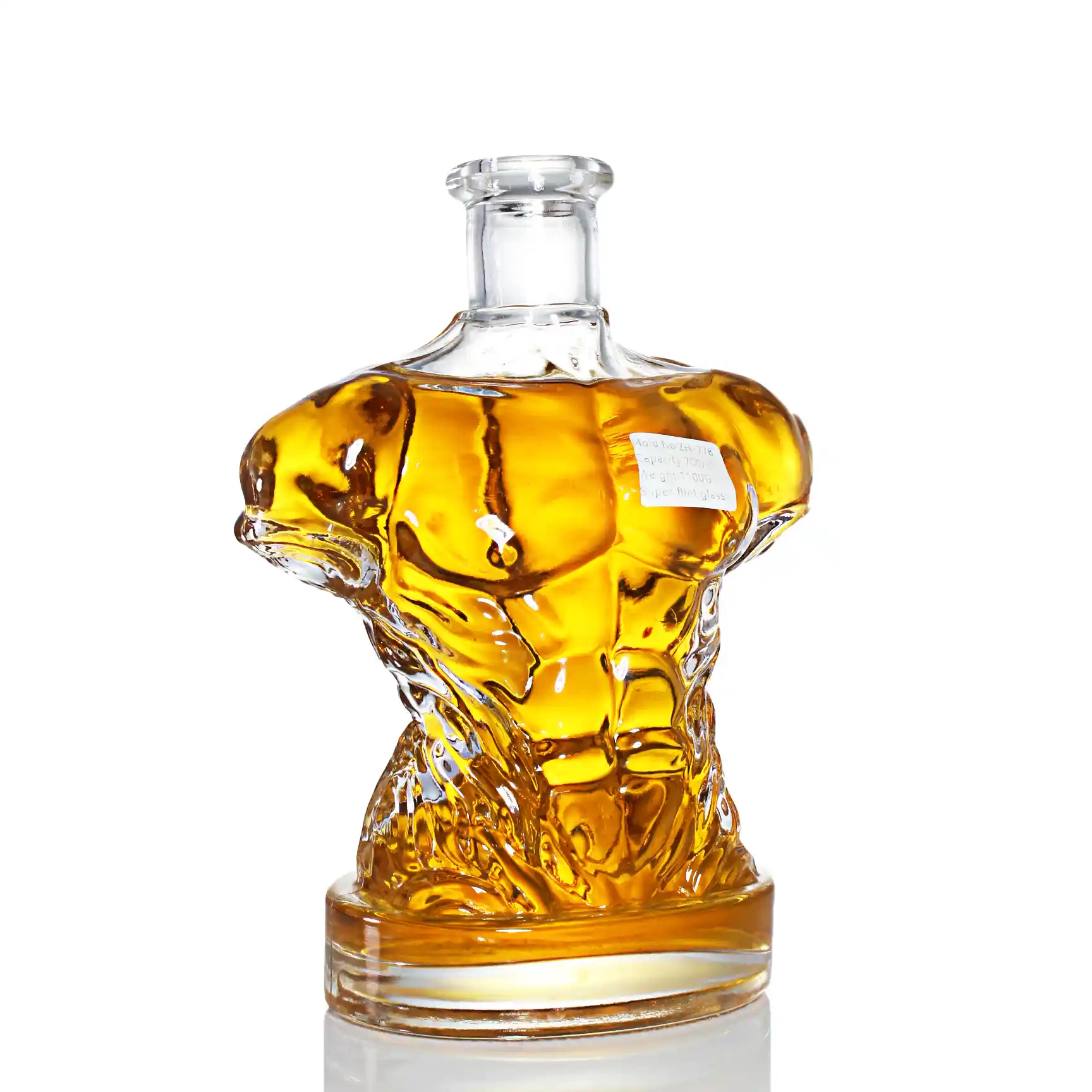
No, the shape of the bottle does not directly impact the flavor of the spirit inside. The chemical and physical properties of glass that preserve flavor are consistent regardless of shape. However, bottle shape has a significant impact on branding, consumer perception, and ergonomics. A tall, slender bottle might convey elegance for a vodka, while a stout, angular bottle can suggest a robust and traditional whiskey.
Why are some whiskeys bottled in dark glass while vodkas are in clear glass?
This is a strategic choice based on the spirit's chemical composition and marketing goals. Aged spirits like whiskey contain many complex organic compounds from the barrel that are sensitive to light. Dark amber or green glass is used to protect these compounds from photodegradation. Vodka, being primarily ethanol and water, has very few light-sensitive compounds. Producers therefore use clear (flint) glass to emphasize the spirit's purity and clarity, which is a key marketing attribute for the category.
Can I reuse a spirits glass bottle for other liquids?
Yes, one of the great advantages of glass is its reusability. Because its non-porous surface is easy to clean and sanitize, a glass bottle can be thoroughly washed and reused for other beverages, homemade liqueurs, or even for decorative purposes. It is important to clean the bottle and its closure thoroughly to ensure no residual flavors remain.
How long does an unopened spirit last in a glass bottle?
If stored properly in a cool, dark place with a stable temperature, an unopened bottle of spirits can last indefinitely without any significant degradation. The glass provides a stable, inert, and sealed environment. While some chemists argue that micro-reactions can occur over many decades, for all practical purposes, a properly sealed bottle of high-proof spirit is considered shelf-stable for a lifetime.
Does a cork or screw cap make a difference in preserving flavor?
Both closures can be effective if they are of high quality. A modern screw cap with an appropriate liner offers the most secure, long-term hermetic seal, providing the best technical protection against oxidation and evaporation. A high-quality natural or technical cork can also provide an excellent seal for many decades, but it carries a small risk of cork taint or of drying out if the bottle is stored upright for extremely long periods. The choice often comes down to consumer perception and tradition versus technical performance.
Is leaded crystal safe for long-term spirit storage?
No, it is not recommended to store spirits in leaded crystal decanters for long periods. The alcohol and low pH of the spirit can cause lead to leach from the crystal into the liquid. While using a crystal decanter for serving over a few hours is generally considered safe, long-term storage (weeks or months) can lead to lead levels that exceed safety standards. For storage, always use the original, non-leaded glass bottle.
The Enduring Clarity of Glass
The relationship between a spirit and its bottle is far more profound than that of a product and its package. It is a partnership built on the unyielding principles of chemistry and physics. We have journeyed through the five pillars that uphold this partnership: the unyielding chemical inertness that refuses to taint the spirit's purity; the absolute impermeability that stands guard against the corrupting influence of oxygen and the slow escape of its essence; the colored shield that absorbs the energy of damaging light; the thermal stability that buffers against the stress of temperature change; and the pristine surface that offers no foothold for impurities or flavor scalping.
Each of these reasons, grounded in material science, reinforces a single truth: glass is the ideal medium for preserving the complex and delicate character of a distilled spirit. It does not add, subtract, or alter. It simply protects. For the distiller who has poured years of expertise into their craft, and for the connoisseur who seeks to experience that craft in its ultimate expression, the choice of glass is not merely a tradition. It is a guarantee. It is the silent, transparent promise that the spirit poured from the bottle is the very same spirit that was lovingly created, a perfect liquid time capsule waiting to be opened.
References
García, A., Losada, P. P., & Domínguez, J. M. (2021). Migration of plasticizers from food packaging to food simulants. Processes, 9(7), 1138. https://doi.org/10.3390/pr9071138
Grant-Preece, P., Barril, C., Schmidtke, L. M., & Clark, A. C. (2017). Photodegradation of wine-like solutions: The role of metal ions and light-absorbing compounds on the development of reductive and oxidative off-odors. Journal of Agricultural and Food Chemistry, 65(1), 178-188.
Lachenmeier, D. W., Walch, S. G., & Kessler, W. (2021). The role of oxidation and Maillard reaction in the aging of spirits. Foods, 10(9), 2056. https://doi.org/10.3390/foods10092056
Van Willige, R. W. G., Van der Heijden, A., De Pooter, H. L., & De Rijke, D. (2002). Flavor scalping by plastic packaging materials. Packaging Technology and Science, 15(2), 89-96. https://doi.org/10.1002/pts.578
Zhonghai Glass. (2025, June 9). What type of glass is used in bottles? Zhonghai Glass. https://www.zhonghaiglass.com/what-type-of-glass-is-used-in-bottles-article/